
Last Reviewed: September 2026
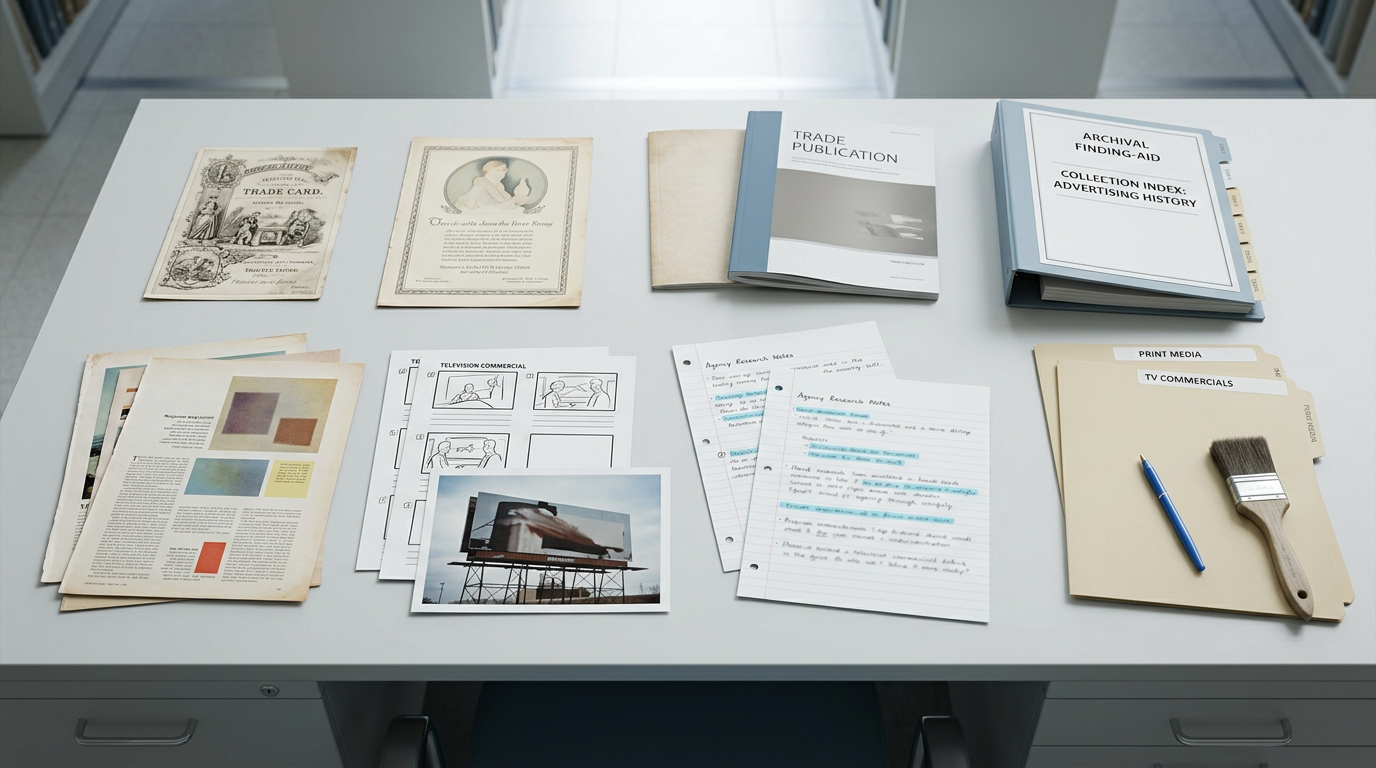
Advertising archives allow researchers to study marketing as it actually appeared in its original historical context. Print advertisements, television commercials, billboards, agency records, trade publications, packaging, research reports, correspondence, campaign materials, and other primary sources can reveal how advertisers understood audiences, positioned products, responded to cultural change, adopted new media, and developed the professional practices that shaped the modern advertising industry.
The AAMA Advertising Archives & Historical Collections directory provides a curated starting point for professionals, students, academics, journalists, historians, researchers, agencies, and anyone investigating the history of advertising and marketing. The directory emphasizes collections with substantial primary-source material, useful institutional documentation, or specialized access to advertising that may otherwise be difficult to locate.
Inclusion does not mean that every item within a collection is freely reusable. Historical materials may remain protected by copyright, trademark, publicity, privacy, or other rights even when an institution makes them available for research. Researchers should review the rights statement associated with the specific item they intend to reproduce.
Major Advertising History Collections
John W. Hartman Center for Sales, Advertising & Marketing History
Duke University’s John W. Hartman Center for Sales, Advertising & Marketing History is one of the most important institutional collections for studying the development of advertising, marketing, sales, consumer culture, and market research.
The Hartman Center is part of Duke University’s David M. Rubenstein Rare Book & Manuscript Library and preserves materials from agencies, industry organizations, researchers, advertisers, and individuals connected with advertising and marketing history.
Its holdings include material involving:
- Advertising agencies
- Market research
- Consumer behavior
- Television advertising
- Print advertising
- Outdoor advertising
- Brand development
- Sales
- Agency operations
- International advertising
- Industry organizations
- Advertising executives
The Center is particularly valuable because researchers can move beyond finished advertisements and examine the organizations, research, correspondence, internal publications, and business processes that produced them.
Duke also provides a substantial collection of digitized Hartman Center materials, allowing researchers to access many historical advertising resources remotely.
Emergence of Advertising in America
Duke’s Emergence of Advertising in America collection documents the development of advertising and consumer culture during the nineteenth and early twentieth centuries.
The collection contains thousands of historical images drawn from multiple Duke archival collections and includes materials such as:
- Print advertisements
- Trade cards
- Billboards
- Calendars
- Broadsides
- Leaflets
- Product promotions
- Early branded materials
- Advertising ephemera
The collection is especially useful for studying the period in which advertising developed from relatively simple announcements and local promotion into a more organized national business.
Researchers can use it to examine changes involving:
- Branding
- Packaging
- Copywriting
- Illustration
- Consumer culture
- Gender
- Medicine
- Transportation
- Food
- Household products
- Retail
- Industrialization
Historical advertisements should be read as cultural evidence as well as commercial communication. They can reveal assumptions about class, race, gender, family, health, work, technology, status, and consumption that may differ substantially from contemporary standards.
Ad*Access
Ad*Access is a Duke digital collection containing thousands of advertisements published in American and Canadian newspapers and magazines during the first half of the twentieth century.
The collection concentrates particularly on advertising involving:
- Radio
- Television
- Transportation
- Beauty and hygiene
- World War II
Ad*Access can help researchers trace how individual categories changed across several decades.
For example, researchers studying beauty advertising can compare how products were positioned before and after major changes in fashion, gender expectations, mass media, or consumer culture.
It is also valuable for studying the development of advertising techniques such as:
- Testimonials
- Demonstrations
- Fear appeals
- Scientific claims
- Status positioning
- Product differentiation
- Lifestyle imagery
- Brand characters
Rather than examining one famous advertisement in isolation, researchers can study groups of advertisements to identify patterns and changes over time.
AdViews
AdViews is Duke’s digital archive of vintage television commercials created or collected by the D’Arcy Masius Benton & Bowles advertising agency.
The collection includes thousands of commercials spanning several decades of American television advertising.
Especially useful for:
- Television advertising
- Creative strategy
- Commercial production
- Brand history
- Consumer culture
- Advertising jingles
- Product demonstrations
- Celebrity endorsements
- Historical media research
Television advertising provides evidence that print archives cannot capture, including voice, music, editing, pacing, performance, animation, demonstrations, and the relationship between advertising and entertainment.
Researchers should pay attention not only to what the commercial says, but also to how television production techniques were used to create credibility, emotion, humor, authority, or memorability.
Resource of Outdoor Advertising Descriptions, ROAD
Duke’s Resource of Outdoor Advertising Descriptions, commonly called ROAD, provides access to a large collection of historical outdoor-advertising images drawn from several archival sources.
Materials include examples involving:
- Billboards
- Outdoor signs
- Transit advertising
- Posters
- Street-level advertising
- Advertising installations
ROAD is particularly useful because outdoor advertising is often underrepresented in conventional archives. A magazine advertisement can survive because libraries preserved the publication, while a billboard may disappear entirely once the campaign ends.
Researchers can use ROAD to examine how brands communicated when audiences had only seconds to process a message.
Important subjects include:
- Headline brevity
- Large-scale typography
- Brand recognition
- Geographic placement
- Visual simplicity
- Repetition
- Transportation
- Changing urban environments
Outdoor advertising can also provide useful evidence about where marketing existed physically within American communities.
Agency Archives
J. Walter Thompson Company Archives at Duke University
The Hartman Center preserves extensive records associated with the J. Walter Thompson Company, one of the most historically significant advertising agencies.
The archive contains materials relating to agency operations, clients, research, employees, international offices, media, campaigns, and the development of modern advertising practice.
Duke’s digitized Hartman collections include J. Walter Thompson Company newsletters, covering decades of internal agency communication.
These materials can be particularly valuable for understanding advertising from inside the agency rather than simply studying what consumers eventually saw.
Researchers may encounter information involving:
- Client accounts
- Market research
- Agency expansion
- Media development
- Staff
- Industry trends
- International marketing
- Advertising strategy
- Corporate culture
Agency archives can reveal why a campaign took a particular direction and how professionals interpreted the market at the time.
N W Ayer Advertising Agency Records
The Smithsonian’s National Museum of American History preserves an extensive archive of N W Ayer advertising-agency records.
N W Ayer & Son was one of the earliest major American advertising agencies and played an important role in the development of national advertising.
The Smithsonian collection contains material including:
- Print advertisements
- Proof sheets
- Billboards
- Radio advertising
- Television advertising
- Agency publications
- Business records
- Employee materials
- International work
- Oral histories
The collection spans a long period of advertising history and allows researchers to study changes within the same agency across several generations of media and business practice.
It can be particularly useful for studying how advertising agencies evolved from organizations centered heavily on print and media placement into more complex businesses involving strategy, research, creative development, radio, television, and international operations.
Smithsonian Advertising Collections
National Museum of American History
The Smithsonian’s National Museum of American History preserves substantial advertising and consumer-culture material across its collections.
Advertising-related objects can include:
- Print advertisements
- Posters
- Packaging
- Promotional objects
- Photographs
- Corporate materials
- Signs
- Broadcast material
- Campaign artifacts
- Consumer products
The Museum’s collections are especially useful when advertising research intersects with broader subjects such as technology, politics, food, entertainment, transportation, business, consumer products, or American cultural history.
Unlike an advertising-only archive, the Smithsonian makes it possible to examine advertising alongside the physical products, technologies, and social environments surrounding it.
Advertising Business: American Enterprise
The National Museum of American History’s Advertising Business section within its American Enterprise exhibition provides a useful historical introduction to the development of advertising in the United States.
The resource follows advertising across periods including:
- Early commercial promotion
- Growth of advertising agencies
- National branding
- Advertising as a cultural force
- Madison Avenue
- Mass markets
- Targeted markets
It is especially useful for students beginning historical research because it places advertising within the broader development of American business and consumer culture.
Researchers can then use the museum’s archival collections to move from the overview into primary-source evidence.
Library of Congress Advertising Resources
Library of Congress Marketing Industry Research Guide
The Library of Congress maintains a research guide specifically addressing brands and advertisements within its broader marketing-industry resources.
The guide identifies historical advertising collections both within and outside the Library of Congress and can provide an excellent starting point when a researcher is unsure which archive may contain the needed material.
Especially useful for:
- Advertising-history research
- Brand history
- Primary-source discovery
- Historical print advertising
- Library research
- Student projects
A research guide should generally be treated as a map to sources rather than the final source itself. Researchers should follow the guide into the original collection whenever possible.
Library of Congress Advertising Poster Collection
The Library of Congress Advertising Poster Collection includes hundreds of historical advertising posters, primarily from the nineteenth and early twentieth centuries.
Subjects include advertising for:
- Books
- Magazines
- Fairs
- Food
- Patent medicines
- Railroads
- Soap
- Sporting events
- Entertainment
- Consumer products
Many examples were preserved through copyright deposit, making the collection useful for studying commercial graphic design and promotional culture from periods in which other advertising materials may be difficult to locate.
Poster collections are particularly useful for studying:
- Typography
- Illustration
- Printing
- Color
- Visual hierarchy
- Brand identity
- Public display
- Graphic-design history
Researchers should review the rights information associated with individual images before reproduction.
Library of Congress Television Commercials Collections
The Library of Congress maintains a research guide to television commercials held within its Moving Image Collections.
Collections include substantial bodies of television advertising from different periods, markets, companies, and broadcast environments.
The Library’s holdings include commercials that can support research involving:
- Television history
- Advertising history
- Product categories
- Consumer culture
- Race and representation
- Gender
- Celebrity advertising
- Regional advertising
- Public service announcements
- Media production
Some collections contain thousands of commercials, while others focus on a particular advertiser, broadcaster, agency, or historical period.
Not every item is available for immediate streaming online. Researchers may need to consult collection descriptions, finding aids, or Library of Congress access procedures.
Commercial & Specialized Advertising Archives
Advertising Archives
Advertising Archives is a specialized commercial archive based in the United Kingdom with a large collection of historical British, European, and American advertising material.
Its holdings span from the nineteenth century through contemporary advertising and include:
- Press advertisements
- Magazine covers
- Magazine artwork
- Television-advertising stills
- Catalogues
- Posters
- Postcards
- Menus
- Theatre programs
- Ephemera
- Vintage magazines
Especially useful for:
- British advertising
- European advertising
- American print advertising
- Magazine research
- Commercial image licensing
- Historical design
- International comparisons
Unlike many academic repositories, Advertising Archives also operates as a commercial image resource. Researchers interested in reproducing materials should review licensing requirements rather than assuming archival access grants publication rights.
WorldRadioHistory
WorldRadioHistory preserves digitized historical trade publications relating to broadcasting, advertising, media, electronics, music, and related industries.
Its dedicated Advertising Collection includes historical advertising-industry publications and books, including runs of trade magazines that can be difficult to find elsewhere.
Especially useful for:
- Advertising trade history
- Media buying
- Broadcasting
- Advertising agencies
- Industry news
- Media economics
- Historical trade publications
Trade magazines are especially valuable because they show what professionals were discussing at the time.
A finished advertisement tells researchers what the public saw. A trade publication can reveal what the industry believed about:
- Audiences
- New media
- Creative trends
- Agency business
- Advertising effectiveness
- Rates
- Research
- Technology
- Regulation
This distinction makes advertising trade publications important primary sources for professional history.
Digital Advertising Archives
Public Interest Ad Archive
The Public Interest Ad Archive provides a research-oriented collection of advertisements gathered from the web.
Unlike archives centered on twentieth-century print or television advertising, this type of collection helps preserve examples of contemporary digital advertising that might otherwise disappear quickly.
Digital advertising presents a particular archival challenge because ads may be:
- Personalized
- Dynamically generated
- Temporarily available
- Targeted to specific users
- Changed rapidly
- Delivered through automated systems
As a result, future historians may have fewer complete records of digital campaigns than researchers have for major print campaigns preserved in magazines.
The Public Interest Ad Archive is especially useful for studying the problem of preserving and analyzing advertising from the modern web environment.
General Historical Web Archives
Internet Archive Wayback Machine
The Internet Archive’s Wayback Machine can be an extremely useful supplementary resource for advertising and marketing history even though it is not an advertising-specific archive.
Researchers can use archived websites to examine:
- Historical brand websites
- Campaign landing pages
- Corporate messaging
- Product launches
- Pricing
- Website redesigns
- Digital promotions
- Online brand positioning
- Agency websites
- Defunct companies
This can be particularly valuable for digital campaigns created before organizations routinely preserved their own online history.
Not every webpage is captured, and archived interactive features may not function correctly. Researchers should treat a Wayback Machine capture as evidence of a particular archived webpage rather than a complete record of everything the organization published online at the time.
Industry Publications as Historical Archives
Advertising history is not preserved only through advertisements.
Trade publications can reveal:
- Campaign launches
- Agency changes
- Client relationships
- Media spending
- New technology
- Research
- Creative debates
- Personnel
- Awards
- Industry controversies
When studying a campaign, researchers should search both the advertisement itself and contemporary professional coverage of the campaign.
An article published at the time may reveal assumptions or objectives that later retrospective accounts omit.
Related AAMA Resource: Advertising & Marketing Publications Directory
Newspapers & Magazines
Historical newspapers and magazines are among the richest advertising archives because advertisements were published alongside the news, entertainment, editorial material, and cultural environment audiences encountered at the time.
Useful sources may include:
- University databases
- Newspaper archives
- Magazine archives
- Library databases
- Digitized periodicals
- Microfilm
This context matters.
An advertisement for a new household appliance means something different when viewed beside other advertisements, contemporary prices, news stories, editorial attitudes, and competing products from the same publication.
Researchers should preserve publication information including:
- Publication
- Date
- Page
- Volume
- Issue
when documenting advertisements found within historical periodicals.
Product Packaging & Ephemera
Advertising history also exists outside conventional media.
Useful historical materials can include:
- Packages
- Labels
- Catalogues
- Brochures
- Coupons
- Trade cards
- Sales kits
- Direct mail
- Store displays
- Promotional merchandise
- Calendars
- Instruction booklets
These materials can reveal how marketing extended beyond paid media and into the product, retail environment, household, and customer relationship.
Ephemera can be particularly useful for studying marketing practices that were widespread but poorly documented through formal publications.
Agency Records vs. Finished Advertising
Researchers should distinguish between studying an advertisement and studying the process that created the advertisement.
Finished advertising can reveal:
- Message
- Design
- Offer
- Positioning
- Representation
- Media format
Agency records may reveal:
- Research
- Strategy
- Client feedback
- Budgets
- Rejected concepts
- Media decisions
- Internal debate
- Campaign objectives
The combination can produce a much stronger historical analysis.
An advertisement may appear obvious in hindsight even though archival records show that the campaign resulted from extensive research, disagreement, testing, or strategic changes.
Search by Brand
When researching a specific company, search archives using:
- Current brand name
- Historical brand names
- Parent company
- Product name
- Manufacturer
- Advertising agency
Brands change ownership and names over time.
A product currently associated with one corporation may have been produced by a different organization during the historical period being studied.
Search by Agency
Agency archives can sometimes reveal material that brand searches miss.
When the agency responsible for a campaign is known, search using:
- Agency name
- Historical agency names
- Predecessor agencies
- Successor agencies
- Holding company
- Key executives
Advertising agencies have merged, dissolved, renamed themselves, and changed ownership repeatedly.
Historical agency relationships can therefore require additional research before the correct archive becomes apparent.
Search by Product Category
Researchers studying broader patterns should search beyond famous brands.
Possible categories include:
- Automobiles
- Tobacco
- Cosmetics
- Food
- Household products
- Technology
- Financial services
- Travel
- Medicine
- Alcohol
- Retail
Category research helps identify conventions that cannot be seen when studying one brand alone.
For example, an advertising technique may appear distinctive until dozens of competitor advertisements reveal that the entire category used the same approach.
Search by Media Type
Different archives specialize in different advertising formats.
Search separately for:
- Newspapers
- Magazines
- Radio
- Television
- Outdoor advertising
- Direct mail
- Catalogues
- Packaging
- Digital advertising
- Websites
- Trade publications
A complete campaign may have appeared across several of these channels.
Researching only the most famous television commercial or magazine advertisement can create an incomplete picture of the campaign.
Search by Time Period
Advertising changes alongside:
- Technology
- Media
- Regulation
- Economics
- War
- Social movements
- Demographics
- Consumer expectations
- Cultural attitudes
Define the historical period carefully.
Researchers studying the 1950s, for example, should consider whether the relevant context begins after World War II or includes advertising developments during the war that influenced postwar marketing.
Historical periods should follow the research question rather than arbitrary decade boundaries alone.
Use Contemporary Sources
Whenever possible, combine modern historical analysis with sources produced during the period being studied.
Contemporary sources may include:
- Advertising trade journals
- Newspapers
- Agency documents
- Speeches
- Research reports
- Consumer surveys
- Government reports
- Company publications
Retrospective histories are valuable for interpretation, but contemporary documents show what people knew, believed, and argued at the time.
Read Historical Advertising Critically
Historical advertisements may contain language, imagery, stereotypes, claims, or assumptions considered offensive, discriminatory, misleading, or unacceptable today.
Archives preserve such material because it is part of the historical record.
Researchers should neither erase problematic material nor reproduce it without context.
Historical advertising can provide important evidence about:
- Race
- Gender
- Class
- Disability
- Nationality
- Religion
- Age
- Family roles
- Body image
- Health
- Labor
- Colonialism
- Consumption
Critical analysis should distinguish between documenting historical practices and endorsing them.
Historical Claims Require Context
Advertising claims that seem extraordinary today may have been created under very different regulatory environments.
Historical advertisements may contain unsupported or misleading claims involving:
- Medicine
- Health
- Nutrition
- Tobacco
- Beauty
- Financial products
- Household safety
Researchers should investigate the regulatory environment of the period before assuming contemporary advertising standards applied.
This can turn an advertisement into evidence about the development of consumer protection as well as advertising.
Preserve Original Context
Whenever possible, record where an advertisement appeared.
Important contextual information may include:
- Publication
- Program
- Network
- Station
- Date
- Page
- Time
- Geographic market
- Surrounding content
A detached image provides less evidence than an advertisement connected to its original media environment.
For example, knowing that a particular advertisement appeared in a women’s magazine, business publication, children’s program, or national newspaper can change how its intended audience is interpreted.
Check Rights Before Reuse
Being able to view or download an archival image does not automatically mean it can be used freely in:
- Books
- Websites
- Advertising
- Documentaries
- Presentations
- Products
- Social media
Rights may depend on:
- Copyright status
- Date
- Creator
- Collection agreement
- Trademark
- Publicity rights
- Intended use
Check the rights statement for the individual item and contact the holding institution when necessary.
Research access and reproduction permission are separate questions.
Do Not Assume “Old” Means Public Domain
Age alone does not determine copyright status.
Some older advertising materials may be in the public domain, while others remain protected.
Researchers should determine the copyright status of the specific work rather than applying a general rule to an entire archive.
Institutional rights statements can provide useful guidance, but researchers remain responsible for determining whether their intended use is permitted.
Cite the Archive & the Original Item
A useful citation should make it possible for another researcher to locate the material.
Depending on the archive, record:
- Advertisement title
- Brand
- Agency
- Publication
- Date
- Collection
- Institution
- Item identifier
- Stable URL
When the archive provides a permanent identifier, use it rather than a temporary search-results URL whenever possible.
Download Research Copies Responsibly
When an institution permits downloads for research, maintain organized local records.
A useful file-naming system might include:
Brand_Year_Publication_Archive_ItemID
Also preserve:
- Source URL
- Collection name
- Date accessed
- Rights information
- Notes
Historical research becomes difficult when images are separated from the information explaining where they came from.
Build a Campaign Timeline
For major campaign research, construct a timeline showing:
- Product launch
- Agency appointment
- Campaign launch
- Major creative changes
- Media expansion
- Competitor responses
- Regulatory events
- Sales or market developments
- Campaign conclusion
Archive materials can then be placed within this chronology.
A timeline helps prevent advertisements from different years or strategic phases from being treated as though they appeared simultaneously.
Compare Advertising Across Periods
Historical archives allow researchers to observe how one product category changes over time.
Compare:
- Product benefits
- Visual style
- Language
- Audience
- Pricing
- Representation
- Proof
- Media
- Calls to action
A century of advertising for automobiles, cosmetics, food, financial products, or technology can reveal changes far beyond design.
It can show how marketers adapted to changing ideas about consumers and society.
Compare Advertising Across Competitors
Do not study important campaigns only through the brand that became historically famous.
Search competitors from the same period.
This can reveal whether the famous campaign:
- Introduced a new approach
- Followed an existing trend
- Reacted to a competitor
- Differentiated against category conventions
- Became famous only in hindsight
Competitive context can substantially change the interpretation of historical advertising.
Look Beyond Famous Campaigns
Advertising history tends to remember award winners, major agencies, celebrated creative directors, and nationally famous campaigns.
Archives can reveal the much larger body of everyday advertising that actually surrounded consumers.
This includes:
- Local advertising
- Regional brands
- Retail advertising
- Classified advertising
- Direct-response advertising
- Trade advertising
- Business-to-business advertising
These materials can provide a more representative picture of how advertising functioned in everyday commercial life.
Recommended Advertising History Research Workflow
A practical archival research process can follow these steps:
- Define the Research Question
- Define the Historical Period
- Identify Relevant Brands, Agencies, Categories, and Media
- Search Major Digital Collections
- Search Institutional Finding Aids
- Examine Trade Publications
- Locate Contemporary Research and Reporting
- Record Item-Level Source Information
- Establish Historical Context
- Compare Competing Advertisers
- Identify Changes Over Time
- Verify Rights Before Reproduction
- Preserve Research Notes and Citations
- Separate Evidence From Interpretation
Historical research is strongest when advertisements become evidence within a documented commercial and cultural context rather than illustrations added after the argument has already been written.
Archive Evaluation Checklist
Before relying on an advertising archive, ask:
- Who maintains the collection?
- Where did the material originate?
- What years are represented?
- Which media are represented?
- Is the collection comprehensive or selective?
- Are item dates documented?
- Are agencies identified?
- Are advertisers identified?
- Is original context preserved?
- Are high-resolution files available?
- Are stable identifiers provided?
- Is rights information available?
- Can the materials be cited reliably?
- Are undigitized holdings available for research?
No archive contains everything.
Understanding what a collection does and does not preserve is essential to interpreting the evidence found within it.
Advertising Archives Preserve More Than Advertising
Advertising archives document far more than attempts to sell products.
They preserve evidence about:
- Business
- Technology
- Media
- Design
- Language
- Consumer behavior
- Culture
- Economics
- Social attitudes
- Regulation
- Professional practice
An advertisement created to sell a product decades ago can later become evidence of how a society understood work, family, status, health, identity, technology, convenience, or progress.
That is what makes advertising archives valuable not only to marketers, but also to historians, journalists, academics, designers, researchers, and anyone studying modern consumer culture.
Related AAMA Resources
Continue historical and professional research with the Advertising & Marketing Research Sources Guide, Recommended Marketing & Advertising Journals, Advertising & Marketing Publications Directory, Marketing Research & Consumer Data Sources, Government Data Sources for Marketers, Marketing Channels Reference Guide, Advertising Ethics Guide, and Advertising & Marketing Professional Organizations Directory. These resources provide additional pathways to primary sources, scholarship, industry reporting, market evidence, professional history, and contemporary marketing practice.
AAMA will continue reviewing this directory as collections are digitized, archives change access systems, institutions acquire new materials, and additional historical advertising resources become available.