
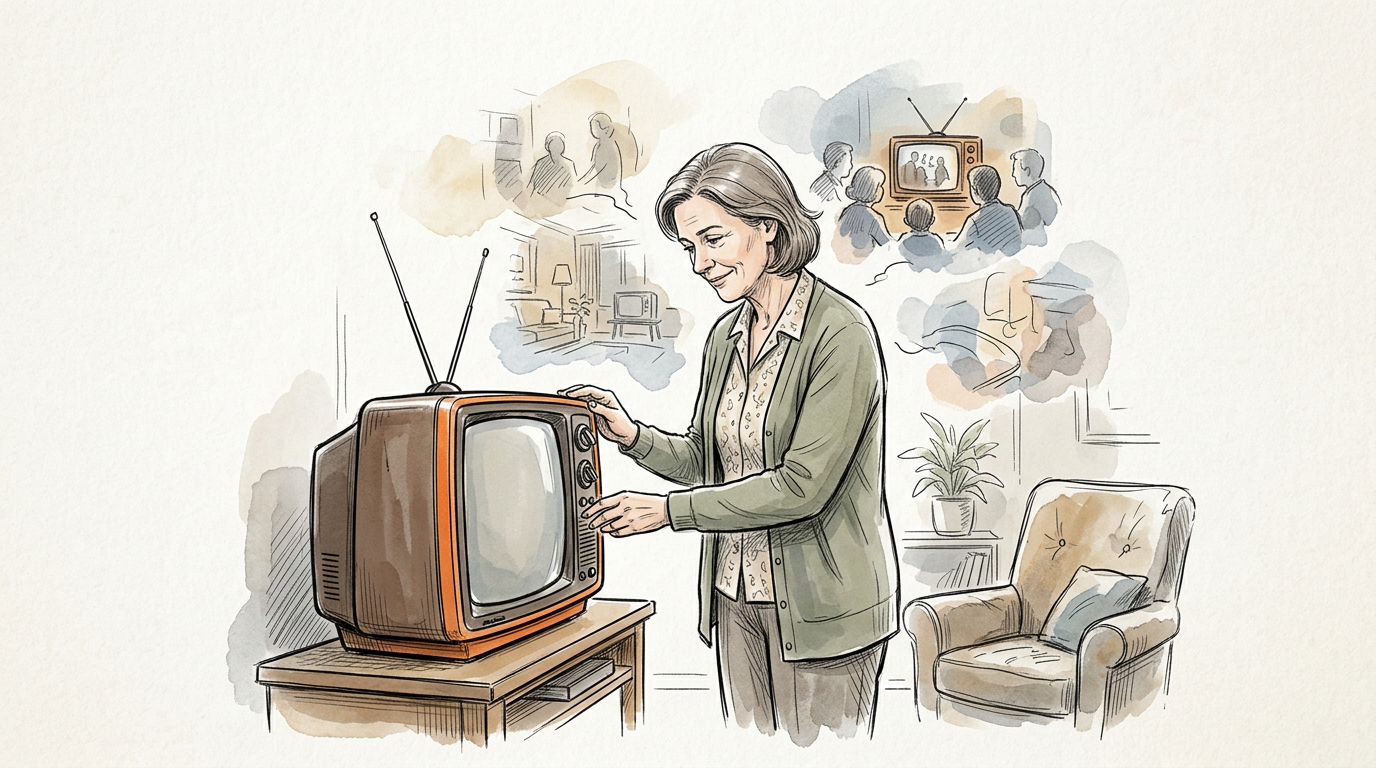
Nostalgia has become a familiar tool in contemporary marketing, from retro packaging and reunion campaigns to soundtracks, visual references, and revivals of discontinued products. Its popularity is easy to understand. In a fragmented media environment, nostalgic cues can cut through quickly, carrying emotional and cultural meaning that consumers already recognize. But the research suggests something more specific than a vague affection for “the past.” Nostalgia works not simply because people like old things, but because it activates autobiographical memory, reinforces a sense of identity across time, and often heightens feelings of social connection.
That also helps explain why nostalgic marketing can misfire. A cue that resonates deeply with one audience may mean little to another. A brand that invokes a shared past without any credible connection to it can feel opportunistic. And campaigns that rely too heavily on a supposedly universal memory may inadvertently exclude consumers whose histories, ages, or cultural references do not match the creative assumption.
For advertisers and marketers, the most useful question is not whether nostalgia “works,” but what kind of nostalgia is being activated, for whom, and under what conditions.
What researchers mean by nostalgia
In everyday language, nostalgia is often treated as simple longing for earlier times. In psychological research, it is more precise. Work by Constantine Sedikides and Tim Wildschut, including a widely cited review in Current Directions in Psychological Science, defines nostalgia as a sentimental longing for the past, typically for meaningful personal experiences rather than an abstract preference for anything old. Their research program, much of it conducted with colleagues including Clay Routledge, Jacob Juhl, and Wijnand Van Tilburg, has shown that nostalgic reflection tends to be emotionally complex: it can include loss or yearning, but it is usually more sweet than bitter and often leaves people feeling socially connected, meaningful, and psychologically grounded. A useful overview appears here: https://journals.sagepub.com/doi/10.1177/0963721414539843.
That distinction matters for marketing. Nostalgia is not the same as “retro.” Retro aesthetics can be purely stylistic. Nostalgia, by contrast, is often autobiographical. It draws power from a consumer’s own remembered life, or from a culturally shared memory that feels personally inhabited. A 1990s visual treatment may register as fashionable design for one viewer and as emotionally charged self-memory for another. The same execution can therefore produce very different responses depending on age, biography, and cultural context.
Autobiographical memory is the engine
Academic work on autobiographical memory helps explain why nostalgic cues can feel unusually vivid and persuasive. Autobiographical memory refers to memory for events and experiences from one’s own life. Research in psychology has long shown that such memories are not neutral records. They are bound up with emotion, identity, and social meaning.
One especially relevant finding comes from the “reminiscence bump,” a robust pattern in autobiographical memory research showing that adults tend to recall a disproportionate number of memories from adolescence and early adulthood. A classic review by David Rubin, Tamara Rahhal, and Leonard Poon in Memory & Cognition summarizes this pattern and its implications: https://link.springer.com/article/10.3758/BF03198426. Although explanations differ, one reason this period matters is that it is dense with firsts, transitions, and identity formation. Music, brands, entertainment, sports, and media from those years can become unusually durable memory markers.
For marketers, this means nostalgia is often cohort-specific rather than generically historical. A song, snack, logo, celebrity, or game console may have special resonance not because it is old, but because it is tied to the life stage when a target audience was forming preferences, friendships, routines, and a sense of self. This is one reason why nostalgia-driven campaigns often perform best when they are tightly calibrated to a generation or micro-cohort instead of vaguely invoking “the good old days.”
At the same time, autobiographical memory is reconstructive. People do not retrieve the past like archived footage. They rebuild it, selectively, through present concerns and emotions. That gives nostalgia its marketing potency, but it also introduces risk. An advertiser may be drawing on memories that audiences have already idealized, simplified, or emotionally edited. If the brand execution clashes with that internal version of the past, the emotional effect can collapse.
Nostalgia and the self over time
One of the strongest research themes in nostalgia studies is identity continuity, the feeling that one’s past and present self remain connected. This matters because consumers are not just buying products. They are often managing narratives about who they have been, who they are now, and what they value.
Sedikides, Wildschut, Routledge, Arndt, and colleagues have repeatedly found that nostalgia can reinforce self-continuity, increase meaning in life, and buffer against psychological threat. In one influential article in Journal of Personality and Social Psychology, nostalgia was shown to counteract loneliness by increasing perceptions of social support: https://psycnet.apa.org/doi/10.1037/a0017595. Other studies from the same research tradition suggest that when people feel uncertain, isolated, or existentially unsettled, nostalgic reflection can help restore a sense of stability.
This does not mean that ads should try to make people feel bad in order to make nostalgia work. It does suggest, however, that nostalgic appeals may be especially effective in periods of transition or disruption, such as moving into a new life stage, navigating social change, or living through broad uncertainty. During such moments, reminders of continuity can be appealing because they reassure consumers that parts of the self remain intact.
That helps explain why nostalgic campaigns often appear during periods of volatility, and why they may resonate particularly well when framed not as pure escape, but as continuity. The strongest examples do not just say, “Remember this?” They say, “This still belongs to you,” or, “This remains part of who we are.”
Why nostalgia is so social
A common assumption is that nostalgia is inward-looking and private. The research suggests the opposite. Although nostalgic memories are personal, they often feature close relationships, shared rituals, family, friends, or collective experiences. In the Sedikides and Wildschut research stream, nostalgia consistently increases feelings of social connectedness and belonging.
That has direct relevance for advertising. Many successful nostalgic campaigns do not center on solitary remembrance. They stage reconnection: family tables, school friendships, neighborhood rituals, fandoms, generations watching together, or a brand that has traveled through family life. In these cases, the brand is not merely an object from the past. It functions as a social bridge.
This is especially important in categories where the product has historically been embedded in routine and relationship, such as food and beverage, entertainment, sports, retail, travel, home goods, and certain personal care products. Nostalgia is more likely to feel authentic when the brand plausibly participated in shared experiences consumers can remember. The emotional effect is weaker when brands try to borrow communal feeling from a past they did not meaningfully inhabit.
There is also a strategic implication for segmentation. Social nostalgia is not only generational. It can be regional, ethnic, national, institutional, or subcultural. A campaign built around a shared school tradition, a particular city’s music scene, or a specific immigrant household ritual may have more force than a broad national throwback because the social memory is denser and more credible. The tradeoff, of course, is reach. Precision may strengthen emotional relevance while narrowing cultural legibility.
Emotion matters, but nostalgia is not simple happiness
Marketers often treat nostalgia as a shortcut to positive affect. The literature is more nuanced. Nostalgia is typically mixed emotion. Researchers frequently describe it as bittersweet. People may feel warmth, affection, gratitude, and comfort, but also loss, distance, or awareness that a time cannot be recovered.
This complexity can be an advantage. Mixed emotions often feel more human and less commercially polished than straightforward positivity. An ad that allows room for tenderness, change, aging, or reunion may better match the emotional structure of actual nostalgic experience than one that simply deploys bright retro symbols and a wink.
A related body of work in consumer research has examined how nostalgic feelings shape brand attitudes and preferences. For example, studies in the Journal of Consumer Research and related journals have found that nostalgia can increase attachment to products and brands when consumers perceive them as identity-relevant or linked to meaningful personal and cultural memories. One influential article by Muehling and Sprott in the Journal of Advertising found that nostalgic ad evocation affected ad attitudes, brand attitudes, and cognitive responses, with personal relevance playing an important role: https://www.tandfonline.com/doi/abs/10.1080/00913367.2004.10639159.
As with most advertising effects research, the practical reading should be modest. These studies often rely on experiments, student samples, or controlled stimuli rather than full market conditions. They are valuable
Leave a Reply