
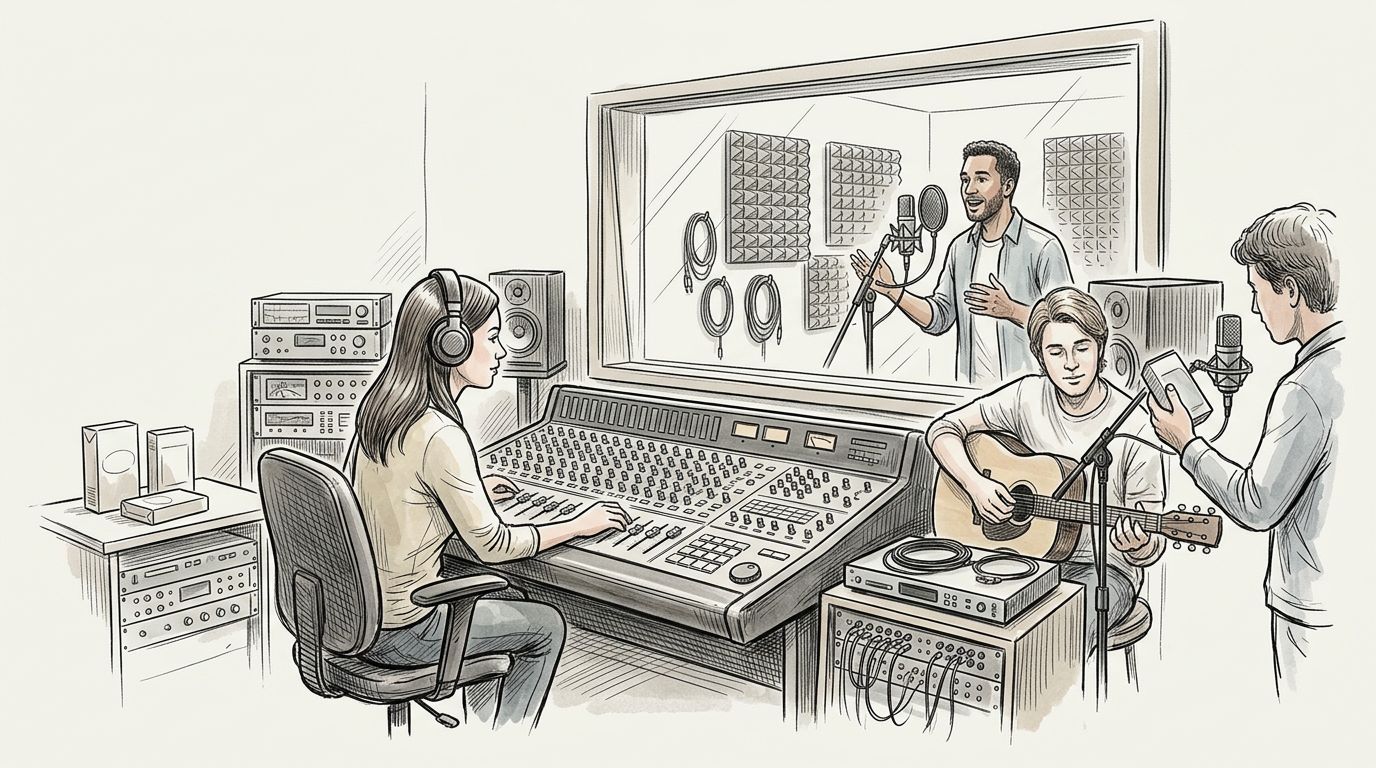
Sound has always been part of branding, but for much of the modern brand era it was treated as secondary to visual identity. That hierarchy no longer reflects how brands are encountered. Consumers move across streaming audio, podcasts, connected TV, social video, retail environments, voice interfaces, cars, games, apps, customer service systems, and smart devices, often without looking directly at a screen. In that environment, sonic branding is not a novelty layer applied after strategy is complete. It is one of the ways brand meaning is expressed, recognized, and remembered.
That does not mean every memorable sound is a sonic brand, or that a short audio signature can do the work of brand strategy. A sonic logo may help identification. A voice assistant tone may support usability. A product sound may reassure users that a function worked as expected. But unless those elements are linked to a coherent positioning, identity system, and experience, they remain fragments. Sonic branding adds value when it helps a brand become easier to recognize, more coherent across touchpoints, and more consistent in how it is perceived over time.
Sonic identity is part of brand identity, not a substitute for it
A brand identity system translates strategic intent into recognizable forms. Traditionally, that discussion centered on names, symbols, colors, typography, packaging, and messaging. Sonic identity belongs in the same family, alongside verbal and visual expression, because it shapes how a brand is recognized and interpreted.
In practice, sonic branding can include several different kinds of assets:
- Sonic logos or audio signatures used at the end of ads, videos, or app experiences.
- Brand music systems that define style, instrumentation, tempo, or mood.
- Voice principles for spokespeople, announcers, assistants, and customer service interactions.
- Interface and notification sounds inside products and digital services.
- Functional product sounds, such as startup tones, shutters, clicks, engine notes, or confirmation cues.
- Environmental sound in stores, events, and branded spaces.
These are not interchangeable. A five-note mnemonic can support recall, but it is only one type of distinctive brand asset. A broader sonic identity system addresses how the brand should sound across contexts, from a 1.5-second sting to a podcast intro, retail playlist, hold music system, app interaction, or spoken brand voice.
That distinction matters strategically. Brand identity is not just what the organization creates. It is also what audiences perceive and remember. Sonic branding therefore has to do more than sound attractive. It has to create recognizable continuity while supporting the brand’s intended meaning.
What sound contributes that visuals alone cannot
The strongest case for sonic branding is not that it replaces visual identity, but that it expands the brand’s presence in moments where seeing is partial, distracted, or impossible. Audio works in parallel with other stimuli and often reaches people in situations where visual attention is limited. Someone may hear a startup tone, a navigation voice, a podcast sponsorship cue, or a streaming platform chime without actively looking at a screen.
That gives sonic identity several forms of strategic value.
First, it can improve recognition. Distinctive sound cues can function as memory shortcuts, helping audiences identify the source quickly. This is especially useful in cluttered media environments where visual assets compete heavily and ad exposures are brief.
Second, sound can reinforce associations. Musical style, tone of voice, pace, and texture all imply things about a brand. They may suggest reassurance, precision, energy, warmth, futurism, authority, playfulness, or luxury. Those associations are not universal, and they vary by culture and category, but they influence interpretation.
Third, sound can support usability and experience. Interface sounds, confirmation tones, and product acoustics are not only expressive. They can help people understand whether something has happened, whether an action succeeded, or what emotional state the product or service intends to create. In those cases, sonic branding overlaps with service design and user experience.
Fourth, sound can create consistency across a fragmented portfolio of touchpoints. A visual identity may not always be visible or feasible in voice-led environments, connected products, or audio-first media. A disciplined sonic system gives the brand another layer of continuity.
Recognition depends on repetition, fit, and distinctiveness
Marketers sometimes discuss sonic logos as if memorability automatically follows from brevity. In reality, recognition usually comes from repeated exposure combined with consistent brand linkage. A short sound is not powerful because it is short. It becomes valuable when people repeatedly encounter it in connection with the same source and can separate it from competing cues.
This is where the distinction between differentiation and distinctiveness becomes useful. Sonic branding can contribute to both, but not in the same way.
Differentiation concerns meaningful differences. A financial services brand, for example, may want to sound more calming and credible than a set of volatile competitors. A sports brand may want an audio system that conveys movement and intensity. A healthcare brand may seek reassurance and clarity rather than theatrical drama. These are strategic choices related to positioning.
Distinctiveness concerns identification. A sound can be highly recognizable even if it does not communicate a deep point of difference on its own. The Intel mnemonic, introduced in the 1990s alongside the “Intel Inside” program, is a classic example of a sound asset that became strongly associated with a brand through disciplined, repeated use across advertising and partner communications. Its value came from recognizability and linkage, not from the claim that five notes themselves conveyed the full strategic meaning of semiconductor leadership.
Likewise, Netflix’s “ta-dum” serves as a strong entry cue in streaming contexts because it is brief, repeatable, and strongly tied to the platform experience. Netflix has treated the sound as part of a wider identity system rather than an isolated flourish, extending it across trailers, events, and brand expression in ways documented by the company and industry reporting. The cue works because it is consistently attached to the service, not because any short sound would have produced the same effect.
Product sounds can be brand assets, but they must begin with function
Some of the most important sonic brand cues are not media assets at all. They are sounds produced by products, interfaces, and environments. The click of a car door, the startup chime of a computer, the shutter sound of a camera app, the tone that confirms a payment, and the voice behavior of a digital assistant can all become part of brand perception.
This area is strategically important because product sounds often influence trust and quality judgments. Research in sensory marketing and human-product interaction has shown that sound affects perceived performance and experience, including how people evaluate products and environments. A product that sounds flimsy, abrasive, or confusing may undermine quality cues even if its engineering is strong. A well-designed product sound can communicate precision, reassurance, safety, or ease.
Still, functionality comes first. The primary role of many interface and product sounds is communicative. They help users interpret actions. When brands try to force stylistic expression into functional sound without respecting usability, the result can be irritation rather than equity. Sonic branding is most effective here when it aligns brand character with human factors, not when it turns every notification into a self-conscious piece of audio theater.
The most sophisticated programs recognize that product sound design sits at the intersection of branding, industrial design, software experience, and behavioral expectations. It should be managed as part of the broader identity and experience system, not left entirely to either marketing or engineering.
Voice is a branding decision, not just a production choice
Sonic branding is often reduced to music and mnemonics, but voice may be the more consequential asset in many categories. How a brand sounds when it speaks influences perceived competence, warmth, authority, accessibility, and trust. This matters in customer service, podcasts, video explainers, IVR systems, social content, retail announcements, and increasingly in AI-assisted interactions.
A brand voice in the sonic sense is not the same as written tone of voice, though the two should relate. It includes accent, pacing, diction, pitch range, emotional expression, and conversational style. A luxury hospitality brand, a public health institution, and a discount retailer may all seek clarity, but they should not necessarily sound alike.
The organizational implication is that spoken delivery deserves the same governance as verbal identity. Many brands have copy guidelines but no meaningful standards for narrated content, voice assistant behavior, call-center scripting, or audio accessibility. The result is fragmentation. The brand may look consistent on a website while sounding entirely different in support channels, retail spaces, and digital products.
As audio interfaces and synthetic voices become more common, this issue becomes more complex. Brands will need to decide whether their sonic identity depends on a particular human performance, a class of vocal behaviors, or a broader set of conversational principles that can translate across human and machine-generated speech.
Music can shape associations, but borrowed equity has limits
Music is one of the most expressive components of sonic branding, yet it is also one of the most misunderstood. Using a popular song in a campaign can create immediate emotional lift and cultural relevance, but that does not automatically build a distinctive sonic asset for the brand. In many cases, the music’s existing associations belong more to the artist or broader culture than to the advertiser.
That can still be effective advertising. It may strengthen attention, mood, or memorability for a specific campaign. But campaign music and sonic identity are not the same thing. If a brand changes musical style radically from one campaign to the next, audiences may remember the ads without building clear memory structures for the brand itself.
This is one reason more organizations have invested in proprietary sonic systems rather than relying exclusively on licensed tracks. A proprietary system can define recurring motifs, instrumentation, rhythm, and production style that can flex across channels while remaining recognizable. It offers continuity beyond any one execution.
The tradeoff is that consistency requires discipline. If a sonic system is too rigid, it can feel formulaic or fail to adapt across regions, sub-brands, and contexts. If it is too loose, it loses recognizability. The challenge resembles the broader problem of brand consistency: maintaining stable meaning and cues while allowing executional variety.
Audio consistency should be managed like any other distinctive asset
Brand consistency in sound does not mean every touchpoint must use the same melody or voice recording. It means the brand remains recognizable and coherent even as executions vary.
That requires governance. Mature sonic branding programs typically define more than a logo sting. They establish rules and principles for how the brand sounds across different applications, such as advertising, social content, on-hold systems, product interactions, live events, retail environments, and corporate communications. They may specify tempo ranges, instrument families, vocal style, emotional guardrails, mnemonic usage, transition cues, and accessibility standards.
This becomes especially important in organizations with multiple business units, markets, agencies, and product teams. Without governance, sonic identity fragments quickly because audio is often produced locally and tactically. Teams commission podcast intros, event stings, app sounds, and video music independently, each solving a short-term production need. The brand then accumulates noise instead of building memory.
The portfolio question also matters. A parent brand may use a master sonic signature while sub-brands maintain their own variations. An endorsed brand architecture might require a sonic relationship that signals connection without erasing individual character. A house-of-brands model may intentionally avoid shared sound assets except in corporate contexts. These are architecture decisions, not merely creative ones.
Legal protection is possible, but not guaranteed
Because sonic branding often aims to create distinctive assets, legal protectability is an understandable concern. In the United States, sounds can function as trademarks if they identify and distinguish the source of goods or services. The U.S. Patent and Trademark Office has registered sound marks ranging from the NBC chimes to various product and media sounds, as reflected in USPTO records and guidance. But not every sound is registrable, and not every recognizable cue is strongly protected in practice.
Several limits apply. Common functional sounds may be difficult to own. Sounds that are too generic, too descriptive of product operation, or insufficiently distinctive may face obstacles. In many cases, acquired distinctiveness must be demonstrated through use and recognition. International protection also varies across jurisdictions.
For brand managers, the practical lesson is straightforward. Sonic assets should be developed with distinctiveness and clearance in mind, but legal ownership is only one part of their value. A sound can be commercially useful for recognition even if its legal protection is narrow. Conversely, a registrable sound mark is not necessarily a powerful brand asset unless audiences actually notice and remember it.
This is one reason naming logic still matters in sonic branding. Verbal identity and pronunciation shape how a brand sounds in speech, search, audio ads, podcasts, and voice interfaces. An organization can have an elegant sonic mnemonic and still create friction if the brand name is difficult to pronounce, inconsistent across markets, or easily confused in audio contexts.
Measurement should go beyond “people liked the sound”
Sonic branding is often evaluated too narrowly through subjective reaction. Stakeholders ask whether a tune is catchy, whether a voice feels modern, or whether a startup chime sounds premium. Those judgments matter, but they are not sufficient.
A stronger measurement approach asks what the sonic system is meant to do and then examines relevant outcomes. Depending on the objective, those may include:
- Recognition and attribution of the sound to the correct brand.
- Recall after repeated exposure.
- Effects on awareness, consideration, and brand associations.
- Perceived fit with positioning and category expectations.
- User comprehension and task success in product interactions.
- Customer sentiment in service environments.
- Consistency of use across markets and teams.
These are consumer-based measures. They differ from broader financial brand valuation, which may be influenced by distribution, pricing, product performance, customer experience, and media investment. It is rarely possible to isolate sonic identity cleanly as the cause of business results. However, it is entirely reasonable to assess whether audio assets are improving recognition, reducing fragmentation, strengthening memory structures, or supporting better experiences.
Testing should also reflect context. A sonic logo may work in headphones but fail in a noisy retail environment. A voice interface may be intelligible in one dialect region and awkward in another. Product sounds that feel reassuring in laboratory settings may become annoying with frequent daily repetition. Sonic identity cannot be managed effectively as a single file delivered at campaign launch.
Rebranding in sound requires strategic clarity
When companies update their sonic assets, the change is sometimes described as a sonic rebrand. That can be accurate, but only if the change reflects a broader shift in brand strategy, identity, audience, architecture, or experience. Replacing an audio signature or refreshing hold music does not automatically amount to a rebrand.
The strategic question is what problem the organization is trying to solve. It may need greater consistency across business units. It may want to modernize an inherited media sound that no longer fits digital contexts. It may be integrating acquired brands. It may be shifting from campaign-led expression to experience-led identity across products and services. Or it may be responding to changes in where and how audiences encounter the brand.
Without that strategic clarity, sonic updates can become cosmetic. Worse, they can destroy accumulated memory by discarding familiar cues without creating stronger new ones. Brand managers should be cautious about assuming that novelty is an improvement. In sonic branding, as in visual identity, equity often resides in the cue audiences already know.
This does not mean sound systems should never change. Brands evolve, categories change, technologies shift, and new touchpoints emerge. But change should preserve the most valuable memory structures where possible and make clear what is being updated: the asset itself, the identity architecture around it, the target audience, or the broader positioning.
Why a sound alone cannot do the work of strategy
The current enthusiasm for sonic branding has sometimes encouraged an inflated view of what audio can accomplish. A sonic logo is not a brand platform. A playlist is not a positioning statement. A custom voice is not a substitute for trust, product quality, or service performance.
Brands gain meaning through accumulated signals and experiences: what they offer, how they compete, how they behave, what they are known for, and how consistently they deliver on expectations. Sonic identity can reinforce that meaning and make it easier to recognize. It can cue memory, shape mood, support navigation, and help unify expression. But it cannot rescue a confused value proposition or compensate for poor customer experience.
That is why the most useful way to think about sonic branding is as a strategic identity discipline. It sits between brand strategy and lived experience. Done well, it connects internal decisions about positioning and character to external moments of recognition and use. Done poorly, it becomes decorative audio production with little lasting effect.
For branding professionals, the practical implication is not that every brand needs a dramatic sonic signature. It is that every brand should understand how it sounds, where sound influences perception, and whether those cues are helping build recognition and coherence or merely filling silence. As media, interfaces, and environments become more audio-responsive, that question is no longer peripheral to brand identity. It is part of how brands are actually experienced and remembered.
Leave a Reply