
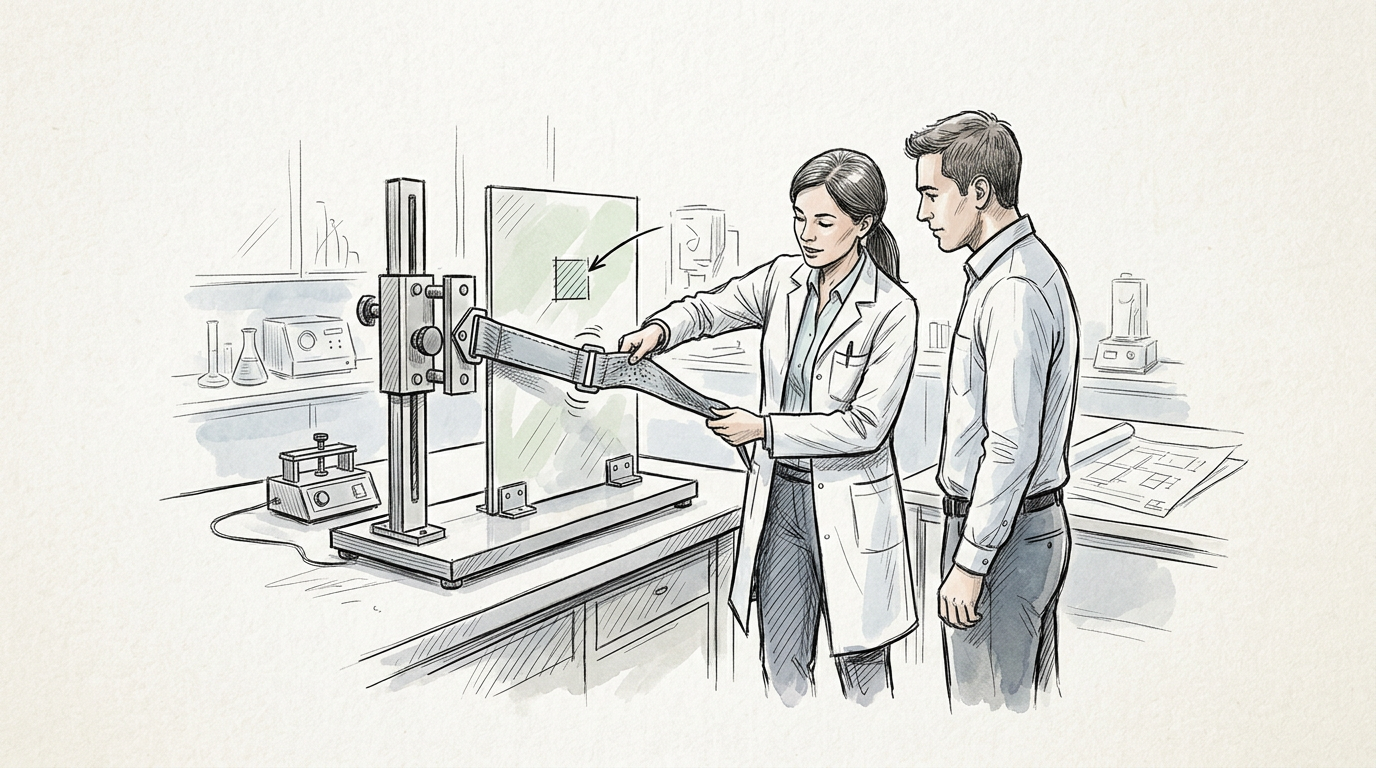
A product demonstration can look almost unfashionably direct in a period when much advertising discussion centers on storytelling, cultural relevance, entertainment value, and brand world building. Yet demonstration remains one of the most durable creative approaches in the business because it answers a basic communication problem with unusual efficiency: if the audience will believe the benefit more readily when they can see it happen, the most creative decision may be to show the proof as clearly as possible.
That does not make demonstration simplistic, nor does it mean every product benefit can or should be dramatized literally. Good demonstration advertising is not just a matter of pointing a camera at a product and waiting for persuasion to occur. It depends on strategic judgment about what kind of proof matters, what the audience may doubt, what must be controlled in production, and how to structure the experience so the benefit is understood, remembered, and linked to the brand. It also requires restraint. Many weak demonstrations fail not because the product lacks merit, but because the creative work adds so much theatrical framing, visual clutter, or strained drama that the proof becomes harder to trust.
When a product demonstration is the best creative idea, the reason is not that creativity has been set aside. The reason is that the strategy and the product are aligned in a way that makes evidence itself the most persuasive form of expression.
Demonstration is a strategy for belief, not just a format
A demonstration is useful when the communication challenge is primarily about credibility and comprehension. The audience does not simply need to know that a brand exists. It needs to understand a concrete benefit and believe that the product can deliver it.
That makes demonstration especially relevant when the offer has one or more of the following characteristics:
- A visible or measurable performance advantage.
- A benefit that consumers have reason to doubt.
- A point of difference that competitors also claim verbally.
- A new mechanism, feature, or formulation that needs explanation.
- A purchase context where practical performance matters more than image alone.
Cleaning products, tools, appliances, personal care, consumer electronics, auto features, packaged goods, B2B software workflows, and health-related consumer products often benefit from this approach, though not always in the same way. A stain remover may lend itself to side-by-side visual proof. A razor may require a tactile or close-up demonstration of precision. A software platform may need an interface demonstration that proves speed, integration, or ease of use. A mattress, insurance product, or financial service may be harder to demonstrate directly and may require proxies, data visualization, testimonials, or scenario-based evidence instead.
The key strategic question is not whether the category has historically used demonstration. It is whether demonstration is the clearest route from proposition to belief.
That distinction matters because some advertisers use “show the product” as a substitute for thinking. A demonstration should emerge from the brief. If the proposition is “our battery lasts longer,” then the creative challenge is to show duration in a way the audience can quickly understand and trust. If the proposition is “our project management software reduces handoff delays,” then the demonstration may need to show workflow friction disappearing in a realistic sequence. If the proposition is vague, such as “better living through innovation,” demonstration will not rescue it.
What makes a demonstration persuasive
The most effective demonstrations usually do four things well.
First, they isolate the claim. The audience should be able to identify exactly what is being proven. If too many benefits are layered into one execution, clarity drops. The work becomes a collage of selling points rather than a persuasive proof.
Second, they make the test legible. Viewers need to understand the conditions, inputs, and outcome quickly. In visual media, this often means careful art direction and staging that remove ambiguity. Which surface was cleaned? Which side received which treatment? What changed? How long did it take? What are we supposed to compare?
Third, they establish fairness or credibility. Demonstration advertising always risks skepticism, especially in categories with a long history of exaggerated before-and-after claims. The audience asks, implicitly or explicitly, whether the test was manipulated. Good creative work anticipates that skepticism. It shows the comparison cleanly, uses plain language, avoids suspicious editing, and often lets the product performance carry more of the persuasion than the announcer does.
Fourth, they connect the proof to the brand. One recurring weakness in demonstration-led work is that people remember the feat but not who did it. The more spectacular the setup, the more carefully the creative team has to manage brand linkage. The product, package, interface, visual identity, or naming needs to be integrated into the proof rather than bolted on afterward.
Simple demonstration is often stronger than elaborate concepting
In creative review, demonstration work is sometimes undervalued because it can appear “obvious.” But obvious is not the same as weak. If the audience has a practical problem and the product visibly solves it, adding conceptual layers may dilute the message rather than strengthen it.
Consider the enduring logic of side-by-side proof in cleaning, laundry, and absorbency advertising. Bounty’s long-running “The Quicker Picker Upper” platform has often relied on straightforward absorbency demonstrations that visually compare paper towel performance under controlled conditions. The line itself gives the brand a mnemonic frame, but the selling power comes from seeing the towels do the job with speed and visible efficiency. The creative idea is not hidden behind symbolism. It is structurally tied to the benefit. That is why the campaign has had such longevity across television, retail environments, digital video, and short-form social adaptations. The proposition generates repeatable proof.
The same can be said, in a different register, for many OxiClean demonstrations associated with Billy Mays. The work was not subtle, and subtlety was not the assignment. The demonstrations showed visible stain removal and cleaning transformation in ways designed for direct response comprehension: high contrast, explicit explanation, energetic repetition, and unmistakable before-and-after structure. The style was loud, but the strategic function was clear. The audience was not being asked to admire the advertising. It was being asked to believe a claim strongly enough to purchase.
Professionals sometimes dismiss this kind of work because it is not culturally fashionable. That is usually a category error. The correct question is whether the creative approach helped the intended audience understand and trust the benefit in the buying context that mattered.
Comparison sharpens proof, but only when the comparison is intelligible
Demonstration often becomes more persuasive when paired with comparison. The product is not merely shown working. It is shown working better, faster, longer, cleaner, easier, or more accurately than an alternative.
Comparison helps because performance is usually relative. “Strong” is abstract. “Lifts this weight when the competitor cannot” is concrete. “Fast” is subjective. “Loads in half the time” is easier to process. But comparison also raises executional and legal stakes. If the creative team cannot present the comparison fairly and clearly, the work risks confusion, distrust, or challenge.
A useful example is Verizon’s “Can you hear me now?” campaign, developed by TBWA\Chiat\Day. Although not every execution was a formal side-by-side demo, the campaign functioned as a repeated performance demonstration of network reliability, using geographic movement and signal presence as proof. The setup translated a technical category into a simple audience question: does the network work where I need it? The campaign’s discipline lay in making an infrastructure claim legible through a repeatable scenario instead of abstract telecommunications language. The idea was not visually extravagant, but it helped turn coverage into a memorable practical advantage. Trade and business coverage over the years has consistently treated the campaign as a landmark in communicating network performance because of that clarity, including retrospective reporting from outlets such as Adweek.
In categories where a true side-by-side comparison is possible, art direction becomes central. The frame must help the audience evaluate the result without strain. Equal lighting, neutral backgrounds, readable labels, visible timing cues, and unambiguous sequencing all matter. If one side looks favored by the setup, trust erodes. If the competitor is obscured so heavily that the viewer cannot understand the stakes of the comparison, the work loses force. The best comparison demonstrations feel almost self-explanatory.
Spectacle can amplify a demonstration, but spectacle is not the demonstration
Some of the most famous product demos use scale, danger, or surprise to make the proof more arresting. That can be effective when the spectacle intensifies the product truth rather than distracting from it.
Volvo Trucks’ “The Epic Split,” created by Forsman & Bodenfors and released in 2013, is a useful case because it sits at the border between demonstration and stunt. In the film, Jean-Claude Van Damme performs a split between two reversing trucks to dramatize the precision and stability of Volvo Dynamic Steering. The execution became widely discussed not just because of celebrity and spectacle, but because the stunt visualized a technical feature in a way that a broad audience could understand instantly. Volvo documented the campaign and its intent on its own channels, framing it as a live test designed to demonstrate steering stability and control rather than a disconnected entertainment property: Volvo Trucks.
What made the piece work was not simply that it was daring. It converted an engineering claim into visible tension. If the trucks were unstable, the stunt would fail. The spectacle gave the proof memorable shape. But this example also shows the risk of escalation. Many advertisers see a successful stunt demo and imitate only the scale. They forget that the underlying claim must remain interpretable. If the audience remembers “that wild thing they did” but cannot explain what product benefit was being demonstrated, the execution may entertain more than it persuades.
A demonstration should not require a post-rationalized strategy deck to explain what happened. The proof needs to be available in the experience itself.
Genuine demonstration versus staged theatricality
This is where creative discipline becomes especially important. Audiences are highly familiar with advertising artifice. They know lighting is manipulated, edits are compressed, surfaces are selected, and performers are directed. None of that automatically invalidates a demonstration. Advertising is a designed communication form. The issue is whether the design helps people understand a real product truth or disguises the absence of one.
Genuine demonstration does not necessarily mean documentary purity. It means the setup is materially connected to the claim being made. If a razor is shown shaving a dense surface cleanly, the setup should correspond to the product benefit. If a speaker is advertised for durability, the environmental or stress demonstration should be relevant to actual product resilience. If a software platform is shown automating tasks, the flow should resemble real use, not a fantasy sequence built around impossible integrations.
Staged theatricality becomes a problem when the execution creates the illusion of proof without actually proving the claim. Common warning signs include:
- The setup is so stylized that the audience cannot judge performance.
- The camera cuts away at the critical moment.
- The comparison conditions appear unequal.
- The narration makes a stronger claim than the visuals support.
- The spectacle bears only a loose metaphorical relationship to the product benefit.
- Disclaimers materially undercut the apparent proof.
This does not just create regulatory or reputational risk. It creates creative weakness. Once viewers sense that the demonstration is doing rhetorical work the product cannot do itself, persuasion drops. The work may still generate attention, but attention without belief is often wasted expenditure.
Copywriting in demonstration advertising: say enough, not more than enough
Because the proof is doing much of the persuasion, the copywriter’s role in demonstration-led work is distinctive. The task is usually not to outshine the visual evidence with verbal cleverness. It is to frame the test, clarify the benefit, guide attention, and state the implication with precision.
That often means using copy to answer four practical questions:
- What are we looking at?
- Why does this matter?
- What is different about this product?
- What should the audience conclude or do next?
Strong demonstration copy tends to be concrete and disciplined. It does not overclaim, decorate, or interpret excessively. In a film, voiceover may help establish fairness, timing, usage conditions, or product mechanism. In print, headlines often work best when they convert an observed result into a clear benefit. In digital formats, on-screen supers can help pace the logic without forcing viewers to infer too much from motion alone.
That does not mean all demonstration copy must sound clinical. Tone still matters. A household product may use friendly, lightly humorous language to reduce hardness. A direct response product may use emphatic repetition because the objective is immediate action. A B2B SaaS demo may rely on plain operational language because the buyer is evaluating workflow implications, not a mood.
What matters is the relationship between language and proof. The more visible and self-evident the demonstration, the less the copy should crowd it. If the writing is doing too much persuasive lifting, the team should ask whether the demonstration is actually strong enough.
Art direction and design determine whether the proof can be read
Demonstration advertising is often judged on the concept, but much of its effectiveness comes from executional legibility. This is where art direction, design, editing, and motion clarity become strategic rather than merely aesthetic concerns.
In static media, a demonstration needs hierarchy. The eye must go to the product, the test condition, and the result in the intended order. Before-and-after structure should be unmistakable. Labels must be readable. Color contrast should clarify, not glamorize. If the composition is too busy, the ad becomes a puzzle.
In video, the same logic applies over time. Shot selection should privilege comprehension over ornamental variety. If a product’s advantage occurs in a small physical action, macro photography or split-screen may be necessary. If duration is the claim, pacing and time cues become part of the argument. If precision matters, camera movement should not introduce ambiguity. Editing must respect the audience’s need to see cause and effect.
For interface-based products, design is even more consequential. A software demonstration can fail creatively because the screen capture is unreadable, the task flow is unrealistic, or the visual treatment tries to make enterprise software feel “cinematic” at the cost of comprehension. In that context, clear zooms, annotations, cursor behavior, and task framing may matter more than polish.
Demonstration work often benefits from visual restraint. Neutral environments, uncluttered backgrounds, and disciplined framing can make proof easier to process. But restraint should not be mistaken for a universal minimalist style. Some categories require vivid color, retail energy, or richer environmental context. The governing question is always whether the design helps the audience interpret performance quickly and credibly.
Not every demonstration needs a story
Advertising professionals often default to narrative because story can increase emotional engagement and retention. But demonstration-led work does not always improve when wrapped in a conventional mini-drama.
Sometimes narrative delays the point. If the audience has limited attention and a practical need, a direct demonstration can be more respectful and more effective than a setup-resolution structure that postpones the benefit reveal. This is especially true in retail, direct response, pre-roll, social cutdowns, landing pages, and lower-funnel environments where the user is already close to decision.
That said, narrative can help when the benefit needs context to feel meaningful. A demonstration of a safety feature may become more persuasive when placed within a realistic driving scenario. A demonstration of office workflow software may benefit from showing the friction of the old process before revealing the improved one. In these cases, story is useful because it frames the problem the product solves. It should not overwhelm the solution.
A good working rule is that narrative should increase the audience’s understanding of the benefit, not merely make the piece feel more like “real advertising.”
Production choices can strengthen or weaken trust
Demonstration advertising places unusual pressure on production because small choices affect credibility. The audience may not notice every technical decision consciously, but those decisions influence whether the proof feels reliable.
Production teams and creative leads need to think carefully about:
- Whether the demonstration should be captured in continuous takes or can tolerate editorial compression.
- What disclaimers are necessary and how they will affect perception.
- Whether practical effects are preferable to postproduction enhancement.
- How much environmental control is needed to make the test fair and legible.
- Whether a presenter, expert, customer, or anonymous performer is the right on-screen guide.
- How close the setup should be to real-world usage conditions.
This is where collaboration with legal, product, engineering, and production becomes essential early, not after the concept is sold. A demonstration idea that cannot be substantiated or safely executed is not yet a creative solution. Similarly, a concept that only works if the key proof moment is heavily manipulated in post may need to be rethought.
Higher production value is not inherently better here. In some cases, a less glossy execution improves trust because it feels more observational. In others, especially with small technical details, sophisticated cinematography is necessary to make the product advantage visible. The right production level is the one that reveals the truth of the benefit most clearly.
Demonstration across channels requires adaptation, not mere resizing
One reason demonstration can be a strong campaign platform is that a single proof idea can generate multiple executions. But that does not mean the same asset should simply be cut down mechanically for every channel.
A television or online film may establish the full test and explain the product mechanism. Social video may need to open on the result first, then quickly show how it was achieved. A print ad may reduce the demonstration to a freeze-frame comparison with one sharp line of copy. Retail signage may focus on a single benefit and package shot. A landing page may need a sequence of demos answering anticipated objections in order.
The strategic proposition can remain constant while the demonstration structure changes by medium. Creative teams should ask what proof burden each placement carries. In a six-second unit, the audience cannot process a complex setup. In a long-form commerce page, they may welcome a more detailed explanation. In-store, quick visual contrast may be enough. In B2B sales enablement, a live or recorded product demo may need scenario detail and interface depth.
The work gets stronger when the system is built around the proof logic rather than around one hero asset.
Feedback on demonstration creative should focus on belief and clarity
Demonstration work can attract unhelpful feedback because it appears straightforward. Stakeholders may assume it is easy to evaluate based on taste alone: make it more exciting, more premium, more emotional, more cinematic. Sometimes those requests are valid. Often they confuse surface enhancement with persuasive improvement.
The right review questions are more rigorous:
- Is the benefit immediately clear?
- Will the intended audience consider the test fair?
- Is the proof strong enough to support the claim?
- Does the execution make the product and brand memorable, not just the setup?
- Are we adding theatrics that reduce trust?
- Is any part of the copy claiming more than the demonstration proves?
- Does the piece fit the buying context and medium?
Creative leaders have an important role here. They need to protect the clarity of the idea while also ensuring that “simple” does not become “thin.” Demonstration work still needs craft, pacing, rhythm, and distinctiveness. The discipline is to improve those dimensions without muddying the proof.
Clients also need to be part of this discipline. Product marketers, sales teams, and legal reviewers often push to add every feature, caveat, and qualifying detail. Some of that information belongs elsewhere in the communication system. The ad’s job may be to prove one decisive reason to believe, not to function as a complete product manual.
How to tell whether demonstration was the right creative choice
Evaluation should begin with the intended job of the work. If the goal was awareness of a new benefit, relevant measures may include comprehension, recall of the specific claim, and brand linkage. If the goal was conversion, response metrics, add-to-cart behavior, lead generation, sales lift, or store movement may matter more. If the category is skeptical, improvement in belief or consideration may be the more realistic early outcome.
Demonstration work should also be evaluated against common failure modes. Did viewers misread the proof? Did they remember the stunt but not the product? Did the brand appear interchangeable with competitors making similar claims? Did the comparison trigger doubt rather than confidence? Did the channel adaptation preserve the logic of the demonstration?
Research on advertising effectiveness has long suggested that creativity and proof do not need to be opponents. Work cataloged by organizations such as WARC and the Institute of Practitioners in Advertising often shows that clear brand-linked communication of a meaningful advantage can be commercially powerful, especially when repeated consistently over time. The specific lesson for demonstration advertising is that disciplined proof can be as creatively valuable as more expressive modes when it solves the real persuasion problem.
When demonstration is the idea, the work needs confidence
There is a particular kind of confidence in choosing demonstration as the lead creative approach. It means trusting that the product truth is strong enough to carry attention and persuasion if presented well. It also means accepting a constraint that many teams resist: not every ad needs to announce its creativity through complexity.
The best demonstration advertising does not confuse simplicity with lack of craft. It uses strategic clarity, exacting execution, and credible proof to reduce the distance between claim and belief. Sometimes that proof is plain and utilitarian. Sometimes it is heightened through comparison or spectacle. In every case, the governing standard is the same. The audience should be able to understand what the product does, believe that it does it, and connect that benefit unmistakably to the brand.
When those conditions are present, a product demonstration is not the fallback idea. It is the right one.
Leave a Reply