
For many brands, the appeal of direct-to-consumer distribution has been easy to understand. Selling directly can improve margin, expand access to customer data, tighten control over pricing and presentation, and create a closer relationship with end users. In some categories, direct channels have become strategically important, and in others they are essential.
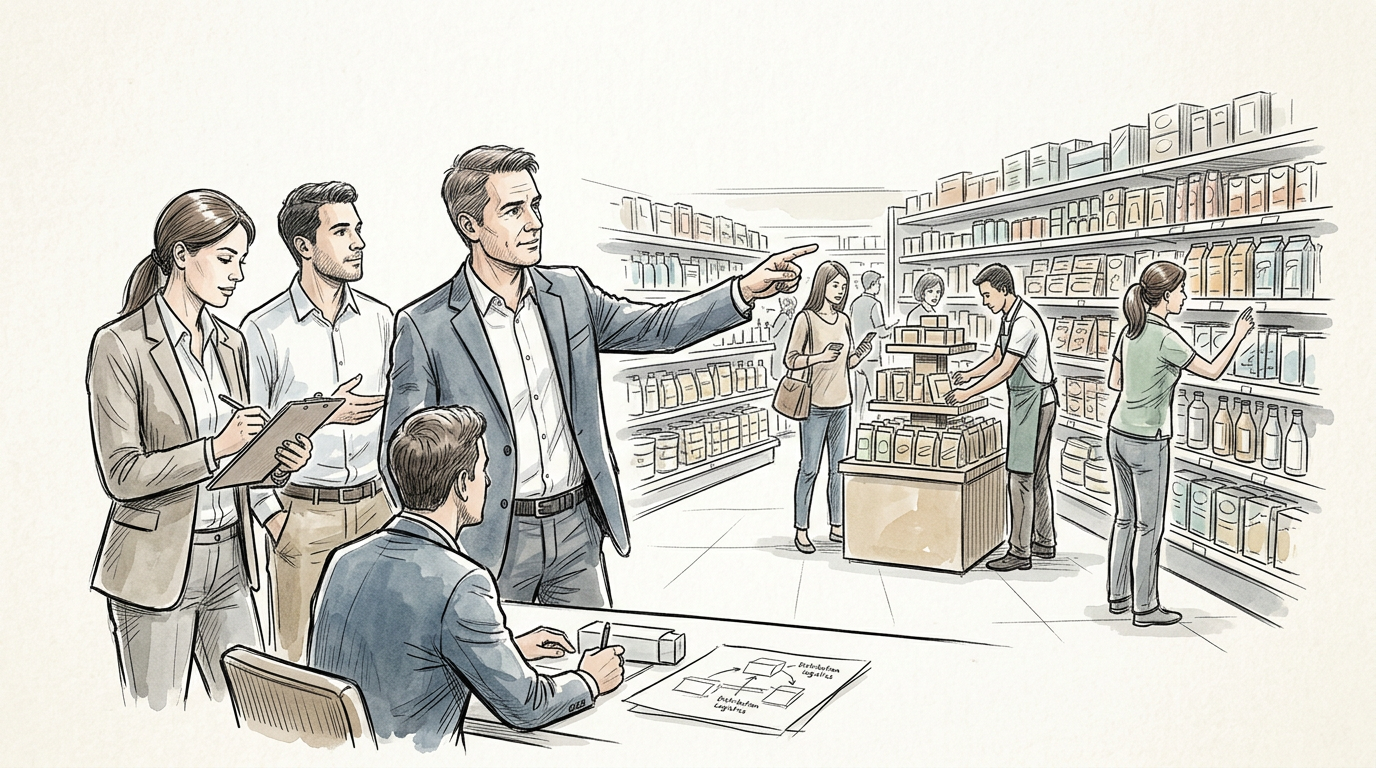
But the growth of direct channels did not eliminate the strategic role of retail partners. In many markets, retailers still matter because they do something most brands cannot efficiently do on their own at scale: aggregate demand, reduce customer acquisition friction, make discovery routine, and turn availability into habit. The strategic question is not whether direct is better than retail, or whether wholesale is outdated. The more useful question is what retailers contribute that a brand would otherwise have to build, buy, or forgo.
That question has become more important as acquisition costs rise, digital attribution becomes less precise, and consumers continue to move fluidly across stores, marketplaces, retail media environments, and brand-owned channels. U.S. retail e-commerce sales reached about $1.19 trillion in 2024, according to the U.S. Census Bureau, yet e-commerce still represented only a minority of total retail sales, with total U.S. retail sales reaching $8.44 trillion in 2024 according to the U.S. Census Bureau and the National Retail Federation. The strategic implication is straightforward: even in a digitally mature market, most consumer spending still flows through retail systems, physical and digital, that brands do not fully own.
That does not mean every brand should pursue broad wholesale distribution. It does mean that retail partnerships remain a live strategic choice, especially when the brand’s growth depends on reach, category visibility, consumer reassurance, replenishment convenience, or local availability.
Retail is not only a channel. It is a market-making institution.
A narrow view of retail treats it as an intermediary that takes margin and imposes constraints. That view captures part of the economics, but misses the strategic function. Retailers do more than resell products. They concentrate shopper traffic, shape category comparisons, reduce search costs, provide physical or digital merchandising, normalize price expectations, and often influence what products consumers consider legitimate options.
In strategic terms, retailers lower the cost of market access. A brand selling through a powerful retailer gains exposure to demand that already exists. It may also gain access to demand that is not yet brand-specific, but category-driven. Shoppers visit grocery chains, home improvement stores, beauty specialty retailers, warehouse clubs, mass merchants, pharmacies, department stores, and online marketplaces with an intention to buy within a category, even if they have not chosen a brand in advance. That distinction matters. If consumers start their shopping journey in retail environments, the retailer is not merely fulfilling demand. It is helping determine which brands are seen, considered, and bought.
This is especially important in categories with habitual purchasing, low switching costs, or high substitutability. In such markets, being absent at the point of purchase can matter more than having strong communications elsewhere. A compelling brand story has limited value if the product is not available when the customer is ready to buy.
Traffic and discovery are strategic assets
Retail traffic is often treated as a distribution benefit, but it is also a customer acquisition asset. Retailers have already invested in location, footfall, digital interfaces, loyalty ecosystems, search functionality, and category organization that draw customers into a buying environment. For brands, that can materially change acquisition economics.
A brand acquiring customers only through owned digital channels typically bears the full cost of generating attention, converting interest, and fulfilling the sale. By contrast, a brand in a strong retail environment can acquire customers through existing shopper flows. That does not make the acquisition free. The cost appears through trade spend, slotting, wholesale margin concessions, retail media, cooperative marketing, or lower realized price. But under many conditions, those economics can still compare favorably with escalating paid media costs and declining performance efficiency at scale.
This is one reason why retail partnerships remain particularly important for emerging brands in crowded categories. A digitally native brand may initially find efficient growth through social platforms or search, but the economics often worsen as the brand moves beyond early adopters. The next layer of growth may depend less on persuading consumers one by one and more on being present where broader demand already gathers.
Discovery also works differently in retail than in brand-owned channels. On a brand website, the consumer has usually already chosen to visit. In a retail setting, consumers can encounter a product while shopping for something adjacent, while comparing alternatives, or while responding to in-store merchandising, shelf placement, retailer search results, recommendations, or promotions. This form of discovery is strategically valuable in categories where consumers are open to substitution, willing to browse, or uncertain about brand preferences.
Digital retail platforms extend this function. Amazon, Walmart, Target, Sephora, Ulta Beauty, and Instacart do not simply process transactions. They shape how products are found and evaluated. In many categories, these environments operate as search engines, comparison engines, fulfillment systems, and trust intermediaries at the same time. A brand may dislike the dependence that can follow, but that does not erase the customer behavior.
Trust is often borrowed before it is earned
Retailers also matter because they lend institutional trust. This is especially valuable when customers face uncertainty about quality, fit, service, authenticity, returns, or delivery reliability.
Consumers may be more willing to try an unfamiliar brand if it is sold by a retailer they already trust. That is not because the retailer guarantees superior product performance in every case. It is because retailer selection, assortment standards, return policies, and service norms reduce perceived risk. In strategic terms, the retailer can serve as a credibility bridge.
This borrowed trust is particularly important for newer brands, higher-consideration products, regulated categories, and products where fit, shade, compatibility, installation, or after-sales support matter. It can also matter in categories threatened by counterfeiting or low-quality alternatives online. Consumers may accept a higher price or a narrower assortment from an authorized retailer because the transaction feels safer.
The trust function is not uniform across retail formats. A specialty retailer can confer expertise and curation. A mass merchant can signal mainstream legitimacy and convenience. A luxury department store can support a premium frame of reference. A warehouse club can imply value and scale. An online marketplace can offer speed and breadth but may create trust concerns unless the brand is clearly authenticated or the retailer tightly manages seller quality. The strategic issue is not only whether a retailer can sell the product, but what its presence says about the product.
This is why channel selection is inseparable from positioning. A premium skincare brand sold in prestige beauty distribution makes a different claim than the same product sold broadly in discount outlets. A home appliance displayed in an expert-assisted environment communicates differently than one sold in a low-service channel. Retail reach that undermines the intended value proposition can weaken long-term brand economics even when it boosts short-term volume.
Merchandising is part of value creation, not just execution
Brands often underestimate how much merchandising affects demand. Product pages, shelf sets, end caps, assortment adjacency, category signage, demos, staff recommendations, and promotional placement all shape how customers interpret the offering. In categories where product benefits are not self-evident, merchandising does not merely support sales. It helps construct consumer understanding.
This is why some retailers are strategically stronger partners than others even at similar scale. A retailer that can educate, compare, sample, or advise may unlock demand a low-service outlet cannot. Beauty specialty retail provides a clear example. Retailers such as Sephora and Ulta do more than distribute products. They create an environment in which trial, comparison, staff assistance, and category browsing can accelerate adoption. For many brands, that environment can produce better conversion and stronger long-term customer quality than a simple broad-reach listing elsewhere.
The same logic applies in home improvement, consumer electronics, sporting goods, and categories with installation or usage complexity. Where product benefits need explanation, a retailer with stronger merchandising capabilities may justify lower margin or stricter terms because it increases the probability of sale and reduces post-purchase dissatisfaction.
Merchandising also matters for portfolio strategy. A brand with entry, core, and premium tiers may need retailers that can present those distinctions coherently. Without that, assortment complexity can become confusion. In some cases, a brand may rationalize SKUs, create channel-specific packs, or reserve premium lines for retailers capable of supporting the intended experience. Those are not merely sales decisions. They are strategic choices about where the brand can actually deliver its proposition.
Logistics, service, and geographic coverage are competitive advantages
Retailers also matter because distribution is not only about access, but about operational competence. Large retailers and distributors provide infrastructure that is expensive and difficult for many brands to replicate: inventory planning, transportation networks, local delivery, returns processing, store replenishment, customer service, installation coordination, and last-mile coverage.
This matters most when demand is geographically dispersed, purchase frequency is high, delivery speed matters, or service requirements are significant. A national retailer can place products close to demand in a way a smaller brand-owned network often cannot. For categories where immediacy matters, such as household essentials, groceries, over-the-counter remedies, or seasonal goods, retail proximity can be a strategic moat.
The economics are straightforward. If a brand tries to replace retail reach with direct fulfillment, it may gain gross margin on paper while taking on new warehousing, shipping, return, and service costs. It may also face higher customer acquisition costs and lower order density. In bulky, low-margin, fragile, temperature-sensitive, or frequently returned categories, direct distribution can become structurally less attractive than it first appears.
Geographic coverage has a customer dimension as well. Some segments are easy to reach digitally and comfortable transacting directly. Others remain more store-oriented, more rural, less brand exploratory, or more dependent on immediate possession and in-person reassurance. A brand that over-rotates toward direct channels may unintentionally narrow its market to customers who are younger, wealthier, more digitally confident, or more willing to plan purchases in advance. That may be acceptable if it reflects deliberate targeting. It is a problem if the brand believes it is serving the mass market while actually limiting its own addressable demand.
Consumer habit favors availability
Marketing strategy often overemphasizes persuasion and underestimates habit. In many categories, customers do not actively re-evaluate every purchase. They buy what is available in the stores they already visit, through the apps they already use, and within the routines they already maintain. Retail partners sit inside those routines.
This is one reason why distribution breadth can be strategically important even when the brand’s communications are strong. Availability does not guarantee preference, but repeated presence in habitual shopping environments increases the chance of consideration and repeat purchase. Byron Sharp and the Ehrenberg-Bass Institute have argued extensively that physical and mental availability reinforce brand growth, particularly in mass consumer markets. Whether or not one agrees with every application of that view, the strategic principle is difficult to ignore: brands grow more easily when they are easy to notice and easy to buy.
Habit also changes the economics of retention. A product integrated into a customer’s normal retailer trip may be repurchased with little additional marketing spend. The same product sold only through the brand’s own site may require reminders, subscription management, shipping thresholds, or ongoing paid reactivation. Direct relationships can improve retention when the product naturally supports replenishment or loyalty, but in many categories the retailer’s convenience does part of the retention work.
That is why retail and direct should not always be framed as acquisition versus loyalty. Retail can support both, especially for replenishment categories where routine visibility and frictionless reordering matter more than deep brand engagement.
The central tradeoff is reach versus control
If retail partners provide so much value, why do brands push toward direct channels at all? The answer is control.
Selling through retail usually means accepting tradeoffs in pricing authority, merchandising consistency, customer data access, assortment presentation, promotional timing, and service experience. Retailers decide what competes side by side. They can pressure brands on wholesale terms, markdown support, exclusives, and retail media spending. Powerful retailers can make a brand visible, but they can also make it interchangeable.
This is the core strategic tension. Retail expands reach, but brand-owned channels increase control. Neither side is universally superior. The right balance depends on category structure, brand strength, economics, customer behavior, and strategic objectives.
A premium or luxury brand may sacrifice some scale to maintain price integrity, service standards, and symbolic value. A mass brand may prioritize ubiquity because availability is part of its value proposition. A newer brand may use selective retail to build legitimacy while preserving enough direct business to maintain data access and higher-margin economics. A mature brand may rely on major retailers for volume but use direct channels for innovation, community, first-party relationships, subscriptions, or higher-service offers.
The tradeoff becomes more complex when retailers also operate media platforms and loyalty ecosystems. Retail media has become a major source of advertising growth. According to eMarketer, U.S. retail media ad spending has expanded rapidly in recent years, led by Amazon and followed by Walmart, Target, Kroger, and others. For brands, this means retail partners are no longer only points of sale. They are also paid demand-shaping environments. That can improve targeting near the point of purchase, but it can deepen dependence on the retailer’s data and auction system.
Retail strategy should follow category economics
The strategic role of retail varies sharply by category. Brands make poor channel decisions when they assume lessons from digitally native apparel, prestige beauty, packaged goods, and consumer electronics transfer cleanly across markets.
In categories with high purchase frequency, low differentiation, and routine replenishment, broad retail distribution may be more important than a rich direct relationship. In categories with high average order value, customization, or strong repeat economics, direct channels may justify greater investment. In categories where trial, shade matching, fit, installation, or service matter, hybrid strategies are often strongest.
Several questions usually clarify the economics:
• Does the customer begin with a retailer, a marketplace, or a brand?
• Is the purchase habitual or highly considered?
• Does the product require education, trial, or service?
• How important are immediate availability and geographic proximity?
• Are returns common or expensive?
• Does the brand benefit from premium presentation or broad visibility?
• How much value comes from customer data relative to retailer reach?
• What happens to acquisition cost and retention if retail is reduced?
• Which channel best supports the intended price position?
These are strategic questions because the answers affect market selection, target customer reach, customer lifetime value, pricing architecture, and brand positioning.
For example, a consumables brand may discover that retailer distribution produces lower nominal margin per unit but superior profit after accounting for acquisition costs and reorder behavior. A furniture brand may find that selective showroom partnerships reduce return risk and increase confidence on higher-ticket purchases. A beauty brand may determine that specialty retail supports discovery and trial while direct channels are better for bundles, replenishment, and owned customer education. In each case, the right answer depends on channel economics and customer behavior, not on ideology about owning the customer.
Channel conflict is real, but manageable with clear roles
One reason brands hesitate to expand retail partnerships is fear of channel conflict. That concern is legitimate. Retailers may object if the brand undercuts them on price, reserves the best assortment for direct, or uses retail primarily as a showroom for its own lower-friction channels. Consumers may also become confused if the product, pricing, availability, and service levels vary unpredictably.
The best response is not to avoid multiple channels altogether, but to define their roles clearly. Channel strategy works better when each route to market serves a strategic purpose rather than simply duplicating the others.
A brand-owned channel might serve as the best environment for full assortment, customization, education, loyalty, and first-party data capture. Specialty retail might provide expertise, trial, and premium merchandising. Mass retail might deliver geographic reach and routine replenishment. Marketplaces might support convenience and incremental demand capture, but with stricter assortment and pricing guardrails. Those choices require coordination across pricing, packaging, promotions, and service, but they can reduce direct conflict.
Clear role definition is also important for innovation. Some brands use direct channels to test products or gather learning before broader retail expansion. Others launch through retail first because scale and shopper traffic matter more than direct feedback. Neither approach is automatically right. What matters is whether the launch sequence matches the economics of the product and the information the brand actually needs.
Retail partners can strengthen or weaken brand power
A common concern is that dependence on major retailers weakens brand bargaining power over time. That risk is real, especially when a small number of accounts represent a large share of volume. Customer concentration can expose brands to margin pressure, assortment cuts, promotional demands, and strategic vulnerability if a retailer changes category priorities.
But the opposite risk also deserves attention. Brands that avoid retail too aggressively may constrain their own growth, overpay for acquisition, and surrender the mass market to competitors that are easier to find and buy. Strategic independence is valuable only if it produces superior economics or stronger long-term brand position.
The practical implication is that retail relationships should be assessed not only by volume, but by strategic quality. Brands should ask whether a partner expands high-value reach, reinforces desired positioning, supports healthy pricing, improves retention through convenience, and complements owned channels rather than cannibalizing them unproductively.
Some retail partnerships are volume-rich but strategically corrosive. Others are margin-thin on the first transaction but highly accretive because they create trial, legitimacy, replenishment, and future cross-channel demand. Professionals need to distinguish between the two.
What this means for marketing strategy
Retail partners still matter because they provide assets that are expensive to replace: traffic, trust, merchandising, logistics, service, geographic reach, and a place inside consumer routines. Those assets shape acquisition, conversion, retention, and positioning. They also affect what markets a brand can realistically serve and at what cost.
The strategic mistake is to think of retail as a legacy channel and direct as the modern answer. In reality, both are route-to-market choices with different strengths, costs, and constraints. Retail usually offers broader reach and embedded demand, but less control. Direct usually offers more control and data, but requires the brand to do far more of the market-making work itself.
For marketers, the right question is not whether retail partners still matter. It is what role they should play in the brand’s growth system. In some businesses, retail is the primary engine of scale and habit. In others, it is a trust-building or trial-generating layer around a strong direct core. In still others, selective retail is the only sensible way to enter a geography, support a price position, or compete with established incumbents.
Good channel strategy starts by recognizing that distribution is not merely fulfillment. It is part of how markets are accessed, value is perceived, and demand is won. That is why retail partners still matter, and why the reach-versus-control tradeoff remains one of the central strategic decisions in marketing.
Leave a Reply