
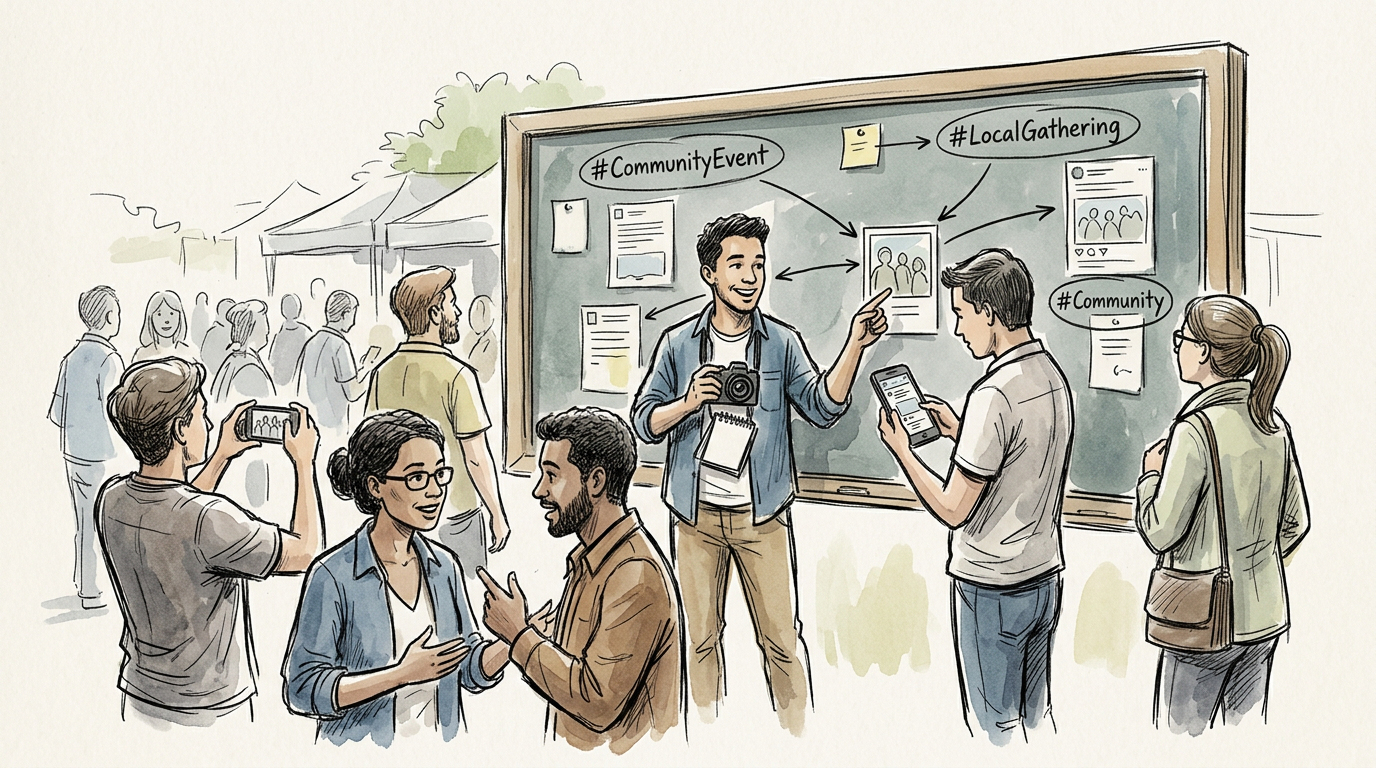
Hashtags have lost much of their old mythology, but they have not lost all of their usefulness.
For years, social media advice treated hashtags as a universal growth mechanism. Marketers were told that a specific number of hashtags would increase reach, that broad trending tags could place almost any post in front of new audiences, or that adding more tags would reliably improve discoverability. Those claims were always too simplistic, and they are even less useful now. Social platforms increasingly rely on recommendation systems that evaluate many signals beyond a label attached to a post, including viewer behavior, watch time, relationships, topical relevance, past interactions, and content format. A hashtag can still help organize content and signal context, but it is no longer a dependable shortcut to distribution.
That does not make hashtags obsolete. It makes them more specific. Their value today is practical rather than magical. In the right setting, a hashtag can help audiences find event conversation, gather user-generated content, connect posts to a campaign, identify a niche community, support monitoring, or provide an additional relevance cue for search and classification. In the wrong setting, it becomes visual clutter, weak metadata, or a leftover habit from an earlier phase of social media.
For marketers, the useful question is no longer “How many hashtags should we use?” It is “What purpose is this hashtag serving on this platform for this audience?”
Hashtags are metadata, social signals, and cultural markers, but not all at once
A hashtag can perform several different functions, and the function matters more than the symbol itself.
At the most basic level, hashtags label content. They can tell a platform and a user what a post is about, whether that topic is a campaign, an event, a category, a fandom, a movement, a geographic location, or a recurring theme. In some environments, that label supports search or aggregation. In others, it mainly helps humans interpret the post.
Hashtags also function socially. They can indicate that a brand is participating in a wider public conversation, joining a cultural moment, or inviting users into a shared activity. A campaign tag, for example, is often less about algorithmic reach than about creating a recognizable thread of participation across many posts and creators.
They can also function culturally. On some platforms, a hashtag is part of internet language. It can frame tone, irony, solidarity, critique, or identity. That is useful only when a brand understands the community using it. A hashtag that carries political, subcultural, or insider meaning can quickly create credibility problems when used carelessly.
Because hashtags perform different jobs, there is no universal best practice that applies across all platforms and all objectives. A tag built for event aggregation is judged differently from a tag built for humor, creator participation, commerce, or search visibility.
Why old hashtag advice aged badly
The decline of one-size-fits-all hashtag guidance is tied to how platforms now distribute content.
In earlier social environments, especially when feeds were more chronological and search behavior was more tag-driven, hashtags often played a stronger direct role in discovery. Users clicked or followed tags to explore topics. Public conversation around television, conferences, live events, activism, and fandom often organized itself through shared tags. Brands could reasonably expect a well-chosen hashtag to place content into a more visible public stream.
Today, discovery is shaped more heavily by recommendations than by manual tag browsing. TikTok’s “For You” feed, Instagram’s recommendations, YouTube’s home and Shorts systems, and other ranking environments prioritize predicted user interest based on behavioral data. Official platform guidance generally emphasizes content relevance, viewer response, and quality signals rather than hashtag volume. On Instagram, for example, the company has repeatedly steered creators toward relevant use of keywords and context rather than formulaic over-tagging. On TikTok, hashtags can help categorize content, but they do not override the platform’s broader ranking signals, which include user interactions, video information, and device and account settings as described in TikTok’s public explanation of its recommendation system.
That shift matters because many marketers still treat hashtags as a distribution tactic first and a communication tool second. In practice, the reverse is often more useful. A hashtag may help classify content, but it cannot compensate for weak creative, poor audience fit, low watch time, unclear framing, or limited community relevance.
The older advice also failed because it confused correlation with causation. High-performing posts often contain hashtags, but that does not mean hashtags caused performance. Strong posts are more likely to be thoughtfully packaged overall, and the content itself may be what drives viewing, sharing, saving, and completion.
Platform differences matter more than hashtag enthusiasm
The importance of hashtags varies substantially by platform, and professional use should reflect those differences.
On Instagram, hashtags still have value, but mostly as one signal among many. They can support categorization, campaign participation, user-generated content collection, and some forms of discovery, particularly around communities or recurring themes. They are less likely than they once were to act as a major independent growth engine. Captions, on-screen text, content quality, topic relevance, and the way users respond to the post generally matter more. Instagram’s own guidance for creators has increasingly emphasized relevance and searchability over hashtag stuffing.
On TikTok, hashtags can be useful for topic labeling, trend participation, challenge mechanics, and connecting posts to a cultural format. They can also help users understand the intended frame of a video. But TikTok discovery is not primarily hashtag-driven. The platform’s recommendation system weighs observed user behavior heavily. A branded post using a popular hashtag without matching the platform’s creative norms is unlikely to gain traction simply because the tag is present.
On X, hashtags still play a meaningful role in live conversation, news events, sports, entertainment, politics, and conference participation. They can help users follow unfolding topics in real time, though the platform’s broader changes in product, moderation, and user behavior have made experience quality less predictable. Here, the hashtag remains closer to its traditional public-thread function than on many visual platforms.
On LinkedIn, hashtags have a narrower but still practical role in organizing professional discussion, industry themes, and event content. They can help frame a topic and may assist some discovery, but they are not a substitute for clear positioning, subject matter relevance, or network effects. Audience trust and professional utility matter more than tag strategy.
On YouTube, hashtags exist but are secondary. Search, titles, thumbnails, audience retention, session behavior, and recommendation systems play a larger role in performance. A hashtag may support categorization or campaign linkage, but few marketers should think of YouTube as a hashtag-led platform.
On Pinterest, user intent is highly discovery-oriented, but keyword relevance and visual search logic tend to matter more than hashtags. On Reddit, hashtags are largely irrelevant because community organization is driven by subreddits, post titles, voting, and moderation structures. On Discord, organization comes through channels, roles, and server norms rather than public hashtag discovery. These differences matter because “hashtag best practices” often ignore the fact that some platforms are organized around social graph dynamics, others around algorithmic recommendations, others around communities, and others around search or discussion structures.
A brand does not need a hashtag philosophy in the abstract. It needs platform-specific judgment.
Where hashtags still create real value
If hashtags are no longer a universal reach lever, where are they still genuinely useful? Several use cases remain strong.
Campaign organization
A campaign hashtag can create a recognizable label that ties together posts across brand accounts, creators, customers, retail partners, and event activations. This is useful not because the hashtag guarantees exposure, but because it creates a common reference point. Teams can monitor participation, collect examples, identify standout creator posts, and measure the volume and character of public response.
The best campaign hashtags are usually clear, distinctive, and easy to use accurately. Overly generic tags are difficult to monitor and may pull in unrelated posts. Overly long tags increase user error and reduce adoption. A campaign tag also needs reputational screening before launch. If it is ambiguous, unintentionally humorous, or easily hijacked, the brand may spend more time moderating than benefiting.
Events and live participation
Hashtags remain especially useful around conferences, trade shows, sports, television programming, product launches, award shows, and live cultural events. In these settings, the hashtag acts less like an SEO tool and more like a temporary public square. It helps attendees, speakers, journalists, creators, sponsors, and remote observers gather around the same stream of commentary.
This use still matters because live events produce fragmented conversation across many accounts. A shared event tag makes it easier to track reactions, surface audience questions, identify emerging themes, and extend the value of the event beyond the room itself. For marketers, event hashtags can also reveal which sessions, announcements, or activations generated actual discussion rather than just passive impressions.
Community identification
Some hashtags function as markers of belonging. They can identify communities built around professions, hobbies, identities, causes, illnesses, neighborhoods, media fandoms, or consumer interests. In these cases, a hashtag may help a user signal participation in a recognizable social group.
For brands, this can be useful but delicate. Joining a community hashtag is not the same as owning it. Marketers need to understand who uses the tag, why they use it, whether it carries internal norms, and whether branded participation is welcome. A company can look opportunistic very quickly if it treats a community identifier as just another discovery label.
User-generated content collection
Branded hashtags are still practical for organizing customer posts, creator entries, contest submissions where legally appropriate, and community showcases. If a brand wants to find photos from an in-person event, aggregate posts around a product drop, or spotlight customer work, a consistent tag can simplify collection.
This is a workflow benefit as much as a marketing one. Social teams can review entries more efficiently, community managers can identify participants, and legal or rights teams can more easily track which content is associated with a program. That said, marketers should not assume every customer will use the tag correctly, or at all. Monitoring usually needs to include mentions, keywords, location references, and visual review in addition to hashtag tracking.
Monitoring and listening
Hashtags are often more useful for listening than for publishing. Teams can monitor campaign tags, event tags, issue tags, protest tags, advocacy tags, or category tags to understand how conversation is developing. This can help identify emerging complaints, confusion, misinformation, praise, competitor activity, or creator participation.
However, listening through hashtags has real limits. Not everyone uses the tag. Some users discuss the topic without adopting the label. Others use the tag sarcastically or to criticize the brand. Automated sentiment systems often misread irony, memes, or slang. Social listening can reveal visible discourse, but it is not a representative sample of the total market or the total customer base.
Selective discovery support
On some platforms, hashtags still provide modest discovery value when they accurately reflect content topics, niches, or recurring interests. That value tends to be strongest when the tag is relevant, specific, and aligned with how users actually search or browse.
This is very different from carpet-bombing a post with dozens of loosely related tags. Irrelevant or excessive tagging can dilute topic clarity and make content look dated or overly optimized. If a hashtag does not help the intended audience understand or find the content, it is probably not helping the platform either.
Hashtags and algorithms: useful context, not secret code
Marketers often ask whether hashtags “help the algorithm.” That phrasing is too vague to be very useful.
A better way to think about hashtags is that they may contribute topical context to a piece of content, depending on the platform, but they do not substitute for the behavioral signals platforms use to predict viewer interest. If users quickly scroll away from a short-form video, a hashtag is unlikely to rescue distribution. If they watch, rewatch, save, share, comment meaningfully, or continue engaging with similar content, the system has stronger evidence that the content is relevant.
Hashtags may also interact with other contextual cues. On-screen text, spoken words, captions, image recognition, audio, account history, and prior audience response can all shape how a platform interprets content. In other words, hashtags are one input among many.
This matters operationally because teams sometimes spend excessive time debating tag lists while underinvesting in the variables that more directly affect distribution: the strength of the opening seconds in video, the clarity of the post’s premise, visual distinction, creator fit, editing, message-audience alignment, or community relevance.
The professional implication is straightforward. Use hashtags when they improve clarity, classification, participation, or monitoring. Do not treat them as a workaround for platform ranking systems.
Hashtags in creator and influencer work
Hashtags still matter in creator programs, but usually for coordination and disclosure context more than for raw reach.
A branded creator campaign may use a shared hashtag to connect participating posts and make campaign review easier for the brand, the agency, and the audience. That can help with campaign tracking, community participation, content collection, and social listening. A good branded tag also creates a visible bridge between creator voices and the wider campaign ecosystem.
At the same time, brands should be careful not to force creators into unnatural hashtag use that weakens the post. Creators understand their audiences’ norms better than most brand teams do. A creator on TikTok may prefer minimal tagging and stronger spoken keywords or caption language. A creator covering a live event on X may find the official event hashtag essential. A beauty creator on Instagram may use a small set of community-relevant tags, while a LinkedIn creator may use few or none.
This is also where disclosure matters. In the United States, the Federal Trade Commission requires endorsements to be clearly disclosed when there is a material connection between the endorser and the brand. A hashtag can be part of a disclosure, such as #ad or #sponsored, but it must be clear and conspicuous rather than buried among many other tags. The FTC’s endorsement guidance is the relevant authority here, not creator folklore. Branded campaign hashtags do not replace legal disclosure, and disclosure tags should not be obscured by cluttered caption strategy.
Hashtags in paid social are not the same as hashtags in organic social
The role of hashtags changes significantly in paid environments.
In most paid social campaigns, audience targeting, bidding, placement, creative quality, frequency control, optimization events, and landing experience matter far more than whether the ad copy includes hashtags. A hashtag in an ad may provide campaign continuity or cultural framing, but it is rarely a central lever of media performance.
In some cases, a hashtag can help an ad feel connected to a broader organic campaign, creator initiative, or event conversation. That continuity can support recognition when audiences see both paid and organic content. For example, a sponsored post amplifying creator content around a branded challenge may benefit from using the campaign tag because it reinforces a recognizable participation mechanic.
But marketers should not confuse this with targeting. In mainstream paid social buying, hashtags are generally not the mechanism by which ads reach relevant audiences. Platforms target based on their ad systems, not by simply serving ads to people who used or followed a tag. The strategic role of the hashtag in paid media is therefore communicative, not magical.
There is also a brand safety consideration. If a paid campaign is built around a hashtag, the surrounding public conversation may not remain favorable. Event and campaign tags can be hijacked, criticized, mocked, or repurposed by opponents. Before amplifying a hashtag through paid media, brands should assess whether the tag environment is stable enough to support that investment.
Hashtags and social search
One reason hashtags still survive is that they intersect with search behavior, but the relationship is uneven.
Users increasingly search within social platforms for products, tutorials, recommendations, aesthetics, services, and local information. In that environment, discoverability depends on more than hashtags. It may involve spoken language in video, caption wording, titles, alt text, metadata, on-screen text, comment context, and the platform’s interpretation of the content itself.
A hashtag can support this by reinforcing topic clarity, especially when it reflects terms users genuinely use. But in many cases, natural-language description is more valuable. A travel brand trying to reach users searching for neighborhood guides may gain more from clearly naming the city, neighborhood, and use case in the caption and video itself than from loading the post with generic travel hashtags.
For marketers, this shifts optimization away from tag volume and toward language discipline. What is the audience actually searching for? How does that language appear in the content? Does the post make its topic obvious to a human viewer and to the platform’s indexing systems? Hashtags can help answer those questions, but they rarely answer them alone.
When hashtags create clutter instead of value
Hashtags become counterproductive when they are used out of habit rather than purpose.
A long tail of generic tags often signals outdated practice. It can distract from the message, reduce readability, and make a post feel templated. On platforms where aesthetic presentation matters, a crowded block of tags can also weaken the brand’s editorial standard. On platforms where conversation matters, it may imply that the team is optimizing for reach assumptions rather than contributing something useful.
Irrelevant tagging is also a credibility risk. Attaching a broad trending hashtag to unrelated content may be interpreted as attention-seeking, especially during serious cultural or political moments. Even when it is not offensive, it often fails because audiences recognize that the content does not belong in that context.
There is also a moderation dimension. Public tags can attract spam, low-quality replies, opportunistic self-promotion, and adversarial participation. Teams running open campaigns or event activations need a realistic moderation plan, especially if participation is encouraged at scale. A hashtag is not just a discovery label. It is also an invitation to public contribution, and public contribution is not fully controllable.
How to evaluate whether a hashtag strategy is working
Hashtag performance should be measured against its actual role, not against inflated expectations.
If the goal is campaign organization, useful metrics may include volume of tagged posts, number of unique participants, share of creator compliance, quality of submissions, rights-clearable content collected, and the relationship between tagged participation and broader campaign reach.
If the goal is event conversation, marketers might examine posting volume over time, participation by key stakeholder groups, top themes, audience questions, engagement quality, sentiment patterns, and whether the event tag extended discussion beyond the live window.
If the goal is discovery support, measurement may involve impressions from non-followers, saves, shares, profile visits, search-driven views where available, and comparisons between similar posts with different packaging approaches. Even then, attribution should remain cautious. A performance difference may be caused by the content itself, timing, creator, topic, or audience behavior rather than the hashtags alone.
If the goal is monitoring, the metric is not just volume. It is insight. Did the hashtag help identify customer confusion early? Did it reveal a reputational issue? Did it surface influential creators, advocates, or critics? Did it help community managers respond more effectively?
This is one reason universal hashtag benchmarks are usually unhelpful. A nonprofit tracking advocacy participation, a beauty brand collecting user-generated content, a B2B marketer covering a trade event, and a retailer supporting creator-led commerce may all use hashtags successfully in entirely different ways.
What a current professional standard looks like
A current, defensible hashtag practice is usually restrained, relevant, and platform-aware.
That generally means using hashtags when they do one or more of the following:
- connect content to a campaign, event, or program,
- help organize user-generated or creator content,
- signal participation in a recognizable community or conversation,
- support monitoring and reporting, or
- add legitimate topical clarity for discovery or search.
It usually does not mean relying on broad, repetitive, generic, or excessive tagging in hopes of unlocking hidden reach. It also means avoiding formulas that ignore platform behavior. The right number of hashtags is the number that serves a clear purpose without degrading the post. In many cases that may be none. In others it may be one highly important campaign tag. In still others, especially around events or niche communities, a small set of relevant tags may be justified.
That standard also requires coordination across teams. Social strategists, community managers, paid media teams, creator managers, customer service teams, and analysts may all rely on hashtags differently. A campaign tag is not just a creative decision. It can affect listening workflows, moderation volume, legal review, creator briefing, social commerce tracking, and reporting structure.
Hashtags are still good for something important: making social activity more legible.
They can make participation easier to recognize, conversation easier to monitor, campaigns easier to connect, and communities easier to identify. They can occasionally support discovery, but they are no longer a serious substitute for understanding how platforms rank content and how audiences decide what deserves attention.
For marketers, that is actually useful news. It moves the conversation away from superstition and toward strategy. A hashtag should earn its place by serving a clear social function. When it does, it remains a practical tool. When it does not, it is just punctuation with unrealistic expectations.
Leave a Reply